


Loading lessons…
Loading lessons…
Curated lessons across 8 learning paths — from first concepts to trial summaries and practical protocols. Pick your level, follow the curriculum, and build real understanding.
Where are you starting?
Choose a learning path below or search the library. Progress saves in your browser.
Prefer timeline chaos? Peptide X Quiz · Literacy certify
Pick a track — progress rings update as you complete lessons.
 9m
9mSearch keeps landing on the same dosing pages. This listicle points you to the guides people actually use for MOTS-c, KLOW, SS-31, GHK-Cu, IGF-1 LR3, and retatrutide.
 8m
8mRetatrutide owns PeptIQ's top blog slots. This listicle orders the beginner path: mix the vial, understand dosing, switch carefully, troubleshoot stalls, then consider stacks.
 10m
10mMost BPC-157 dose threads treat forum tables as fact. This guide separates published animal and limited human data from observational ranges people log, without turning either into a protocol.
284 lessons
 8m
8mSS-31 and MOTS-c dominate mitochondrial peptide search. This list ranks the PeptIQ guides that answer dosage, timing, and stack questions without the forum noise.
9mSearch keeps landing on the same dosing pages. This listicle points you to the guides people actually use for MOTS-c, KLOW, SS-31, GHK-Cu, IGF-1 LR3, and retatrutide.
 8m
8mKLOW is a top PeptIQ page and a top search query. This guide ranks blend options, explains GLOW, and points to the deep dosing pages for each component.
8mRetatrutide owns PeptIQ's top blog slots. This listicle orders the beginner path: mix the vial, understand dosing, switch carefully, troubleshoot stalls, then consider stacks.
 7m
7mNovo Nordisk submitted CagriSema in December 2025. The fixed-dose amylin and GLP-1 combination remains investigational while FDA reviews the application.
 7m
7mThe panel backed six peptide nominations but not Emideltide. Here is why evidence and identity questions mattered, and what the result means for people following sleep peptides.
 7m
7mEpitalon received a narrow advisory vote for 503A compounding in insomnia. That vote is not FDA approval, immediate access, or validation of longevity claims.
 7m
7mA beginner-friendly guide to KPV, its relationship to alpha-MSH, the evidence behind its nominated uses, and the limits of the 2026 PCAC recommendation.
 7m
7mMOTS-c now has a favorable advisory recommendation. It still does not have FDA drug approval or an open 503A compounding path.
 7m
7mThe first small-molecule oral GLP-1 option removes injection training and cold-chain handling, but daily dosing creates a different adherence job.
 7m
7mPCAC recommended BPC-157, KPV, TB-500, MOTS-c, Semax, and Epitalon for 503A compounding. The unresolved fight is what happens while FDA completes rulemaking.
 7m
7mPositive TRIUMPH-2 and TRIUMPH-3 results did not produce a 2026 filing. Lilly says the remaining work is in the CMC and manufacturing package.
 7m
7mThe favorable Semax vote moved its compounding nomination forward, but the narrow result exposed unresolved questions about evidence, characterization, and US clinical use.
 8m
8mThe loudest peptide stories are moving at different speeds. PCAC recommendations await FDA action, oral GLP-1 access is real, and the next obesity programs still have filing or review milestones ahead.
 7m
7mTB-500 received a favorable advisory recommendation for wound healing. FDA action still has to follow, and the product sold online may not match the substance the committee reviewed.
 7m
7mA favorable advisory vote is not permission to prescribe or compound. Here is the practical standard telehealth clinics should use after the 2026 PCAC meeting.
 8m
8m5-Amino-1MQ dosage searches grew more than 1,400 percent. The stack page already ranks. This companion stays on milligram ranges and oral versus subQ handling language.
10mMost BPC-157 dose threads treat forum tables as fact. This guide separates published animal and limited human data from observational ranges people log, without turning either into a protocol.
 10m
10mCJC-1295 dose threads often ignore whether the vial is the albumin-binding DAC form or Mod GRF 1-29. The papers treat those as different exposure patterns. So should any educational chart.
 9m
9mEpitalon dose threads sell multi-day courses as if they were modern RCTs. The published record is older, smaller, and more specific than the calendars imply.
 9m
9mIpamorelin is discussed as a selective ghrelin-receptor secretagogue with a quieter side-effect story than older GHRPs. The papers describe pharmacology. Forum charts describe habits.
 8m
8mNAD+ 1000 mg reconstitution searches want a 1 g calculator. The existing NAD+ guide covers smaller vials. This page does the 1000 mg arithmetic and keeps it educational.
 9m
9mTissue repair is not a side topic anymore. It is one of the clearest signals in peptide research, from wound care to training recovery.
 9m
9mQueries about how much BAC water for a 20 mg retatrutide vial want a calculator. This page shows the arithmetic and why trial pens and unlabeled cakes are not the same object.
 9m
9mSermorelin is the short GHRH analog older clinic pages still treat as the gentle GH option. The literature is real. The nightly microgram charts are practice culture, not a modern phase 3 program.
 10m
10mTB-500 threads collapse a fragment, a parent peptide, and forum loading weeks into one chart. The papers are more specific, and the human dosing story is thinner than the marketing.
 9m
9mTesamorelin is one of the few GHRH analogs with an FDA-labeled daily milligram figure. That number belongs to a specific product and indication. It does not automatically travel to an unlabeled vial.
 9m
9mThymosin alpha-1 has a thicker clinical literature than most research-vial peptides. The milligram figures in those papers still belong to study and labeled-product contexts, not an unlabeled cake.
 8m
8mBPC-157 is still a research compound, but the advisory review makes one thing clear: access, sourcing, and evidence quality now matter as much as the mechanism.
 9m
9mRetatrutide often makes the first few weeks feel easy. The harder part is keeping protein, hydration, and training quality high enough to protect muscle while appetite stays low.
 8m
8mCopper peptide chemistry is getting more interesting because the newest diabetic wound work tries to solve glucose, hypoxia, and infection in the same system.
 9m
9mGLP-1s can change sleep and mood in both directions. The pattern usually comes down to dose timing, appetite changes, side effects, and the bigger metabolic picture.
 9m
9mTesamorelin makes more sense when you track the body it changes, not just the number on the scale. Waist, liver fat, IGF-1, and lean mass tell the real story.
 10m
10mThis week’s signal is less about hype and more about discipline. The compounds matter, but the outcome depends on what you track when appetite, recovery, and tissue repair start to change.
 10m
10mThe latest sports medicine review is useful because it separates promising recovery biology from the human evidence gap and the antidoping risks.
 8m
8mGLP-1 drugs do more than blunt hunger. They change the signals that shape appetite, food reward, and energy balance, which is why the mechanism matters.
 8m
8mMOTS-c is moving beyond the vague mitochondrial hype cycle. The newest data suggests it may participate in membrane repair, which changes the recovery conversation.
 9m
9mPemvidutide is interesting because it does not just ask whether body weight falls. It asks whether liver fat, waist size, appetite, and recovery move together in a clean direction.
 9m
9mThe newest peptide research batch is less about hype and more about the questions each compound answers. Retatrutide, tesamorelin, BPC-157, GHK-Cu, and MOTS-C all point at different tracking priorities.
 9m
9mScale weight can lie when appetite drops, water shifts, and training changes. This checklist shows the signals that matter more than a single number on the scale.
 8m
8mThe new peptide conversation is not just about appetite and fat loss. Recovery, tissue quality, and mitochondrial support are becoming the real filters.
 11m
11mMid-40s and new to peptides? This guide explains how beginners typically choose a conservative first protocol using goals, compound class, published ranges, and tracking — without inventing a prescription.
 9m
9mPeople do not stay on GLP-1 plans because they are disciplined forever. They stay on them when the plan feels manageable, repeatable, and clear enough to trust on a busy week.
 12m
12mKisspeptin-10 sits upstream of GnRH in reproductive endocrinology research. This guide explains mechanism, what people track, dosing as community discussion only, and why Kispeptin searches miss the mark.
 10m
10mDry powder vs mixed liquid changes everything — concentration, storage, and beyond-use timing. This guide explains lyophilized vs reconstituted peptides and what people mean by constituted vs non.
 12m
12mReta plus Tesa is one of the most asked stack questions in 2026. This guide explains why people combine metabolic and visceral-fat peptides, what to track, and why same-syringe mixing is usually avoided.
 11m
11mA 10 mg Selank vial looks simple until you mix the wrong diluent volume or chase a Sealink listing. This guide covers BAC reconstitution math, route context, and tracking habits — educational only, not medical advice.
 9m
9mThe latest peptide research wave is less about hype and more about what survives real-world tracking. Here is the practical read on retatrutide, BPC-157, MOTS-c, and GHK-Cu.
 10m
10mRetatrutide may dominate the weight-loss discussion, but the market debate is really about quality control, documentation, and whether a plan can survive real life.
 9m
9mMOTS-C keeps showing up in 2026 because it points at mitochondrial signaling. The trap is assuming that better signaling automatically means better recovery. It does not.
 9m
9mThe hard part of retatrutide is not the first week. It is what happens when appetite falls faster than planning improves. Protein, training, and sleep start to pay the bill.
 10m
10mRetatrutide is moving from conference noise into real-world access. That shift changes the conversation from headline weight loss to who gets treated, what gets monitored, and how body composition holds up.
 8m
8mRetatrutide is still the loudest metabolic signal in the room. The people who get the best result are the ones who track body composition, not just pounds lost.
 8m
8mThe clearest signal in today's peptide research is not one molecule. It is the pattern: recovery peptides, metabolic peptides, collagen support, and mitochondrial tools all need tighter tracking.
 9m
9mWhen appetite drops, structure matters more. The people who keep the best retatrutide results are the ones who protect protein, training, and hydration before the scale gets noisy.
 8m
8mAmycretin puts GLP-1 and amylin in one molecule — with both a pill and a weekly shot in development. Here's the beginner map before Phase 3 ladders finalize.
 9m
9mAmycretin is Novo's dual GLP-1 + amylin molecule with both oral and injectable programs. Here's the early dosing map and why Phase 3 is the next SEO wave.
 8m
8mSame company family of ideas — GLP-1 + amylin — two product architectures. Here's how amycretin compares to CagriSema without fake head-to-head rankings.
 8m
8mCagrilintide is the amylin half of CagriSema. Here's the dosing map people actually search — 2.4 mg weekly combo context, monotherapy signal, and how not to cross-titrate with eloralintide.
 8m
8mCT-388 is Roche's weekly tirzepatide-class dual agonist with Phase 2 doses up to 24 mg. Here's the dosing vocabulary and the weight-loss signal searchers want.
 9m
9mEloralintide is Lilly's once-weekly selective amylin receptor agonist. If you follow GLP-1s, CagriSema, or retatrutide, this is the next pathway to understand — satiety biology, trial doses, and what the early data actually show.
 8m
8mSearching for eloralintide dosage? Here is the clean map of Phase 2 once-weekly doses, titration arms, and weight-loss results — framed as clinical education, not a DIY protocol.
 8m
8mAmylin + incretin is the stacking thesis behind CagriSema — and now eloralintide. Here's the clinical logic for combining pathways, without turning investigational drugs into DIY stacks.
 8m
8mPeople searching how to reconstitute eloralintide usually want a retatrutide-style BAC water chart. Here's the honest version — clinical weekly product vs unverified research powder.
 7m
7mAmylin agonists can feel GLP-1-like in the gut. Here's how to think about eloralintide tolerability, escalation, and symptom tracking without turning trial data into fear content.
 7m
7mWeekly amylin agonists are not MOTS-c. Here's when to inject eloralintide for tolerability — dose-day meals, evening vs morning, and what to log.
 8m
8mBoth hit amylin biology. One is Lilly's Phase 3 monotherapy / combo candidate. The other is the amylin half of CagriSema. Here's a clear comparison for people following the next wave of obesity peptides.
 8m
8mTwo weekly amylin programs, two sponsors, two data shapes. Here's a clear eloralintide vs petrelintide comparison for people following the next obesity wave.
 8m
8mPhase 2 put eloralintide on the board with roughly 9–20% mean weight loss at 48 weeks. Here's the results breakdown — and the troubleshooting mindset for plateaus on any amylin or GLP-1 protocol.
 6m
6mMacupatide is the Lilly code name beside eloralintide that most people skip. This beginner guide explains what it is — and what not to invent about dosing yet.
 7m
7mEloralintide is only half the Lilly amylin headline. Macupatide shows up in the same ClinicalTrials.gov cluster. Here's the combo literacy guide.
 8m
8mMariTide is Amgen's once-monthly obesity candidate. This beginner guide covers the mechanism framing, Phase 2 headlines, and what serious trackers should log.
 9m
9mMariTide is the once-monthly obesity candidate people keep comparing to weekly GLP-1s. Here's the Phase 2 dosing map — 140 / 280 / 420 mg and the escalation arms that mattered for tolerability.
 7m
7mMonthly conjugates can pack a bigger post-dose GI window. Here's how to think about MariTide tolerability using Phase 2 lessons — without fear content.
 8m
8mWeekly vs monthly is the real MariTide comparison. Here's how Amgen's conjugate stacks up conceptually against weekly dual/triple agonists — without fake head-to-heads.
 7m
7mMazdutide is a once-weekly glucagon/GLP-1 dual agonist with clear Phase 3 dose anchors at 4 mg and 6 mg. Here's the dosing and results map searchers want.
 8m
8mOrforglipron is Lilly's once-daily oral small-molecule GLP-1. Here's the titration ladder searchers want — 1 mg start, step-ups every four weeks, and Phase 3 maintenance doses.
 7m
7mPetrelintide is the amylin analog drawing attention for tolerability. This beginner guide covers what it is, what ZUPREME-1 showed, and what to watch next.
 8m
8mPetrelintide is the Roche/Zealand once-weekly amylin analog drawing GLP-1-level attention for tolerability. Here's the Phase 2 dosing pattern, results, and what to track.
 8m
8mSS-31 dosage searches keep climbing alongside MOTS-c. Here's the practical elamipretide dosing map — daily mg ranges, timing, cycling, and what to track for mitochondrial protocols.
 8m
8mSurvodutide is Boehringer's glucagon/GLP-1 dual agonist. Here's the dosing map from dose-finding through Phase 3 — weekly mg ranges, escalation logic, and what the weight-loss data showed.
 8m
8mTesamorelin is a body-composition tool, not a bathroom-scale trick. The best results show up when you track the right metrics from the start.
 9m
9mMOTS-c looks interesting because it can push metabolism in the right direction and still pull repair in the wrong one. The new data are a reminder that pathway activation and tissue healing are not the same thing.
 9m
9mRetatrutide changes the appetite game fast. The people who get the best result are the ones who keep protein, training, and waist measurements in view at the same time.
 8m
8mA 2025 review makes the same point the peptide world keeps avoiding: some compounds have real human data, and many popular names still do not.
 9m
9mRetatrutide is forcing a better conversation about fat loss. The scale matters, but body composition, protein, and strength tell you whether the result will hold.
 8m
8mAppetite control is useful only if it does not turn into under-eating. Track the right signals early so the scale does not hide the real tradeoffs.
 9m
9mRetatrutide keeps stacking strong data, and the latest trial update sharpens the path toward an FDA submission. The bigger story is not just weight loss. It is how the triple-agonist profile may change what obesity medicine expects from a next-wave therapy.
 8m
8mThe regulatory story matters because it changes what you can trust, what you should track, and why supply chain quality now sits beside mechanism in the BPC-157 debate.
 9m
9mRetatrutide can change weight fast enough to dominate the headline, but the better question is whether the loss is moving the right tissues, the right labs, and the right habits. That is where waist circumference becomes more useful than the scale.
 9m
9mThe GH-IGF1 axis keeps showing up in peptide medicine because it links visceral fat, recovery, and lean mass. The trick is separating the clinical signal from the wellness noise.
 8m
8mBPC-157 has a real research footprint, but most of the confidence in the compound still comes from preclinical work. That gap matters when people start talking about safety like the answer is settled.
 9m
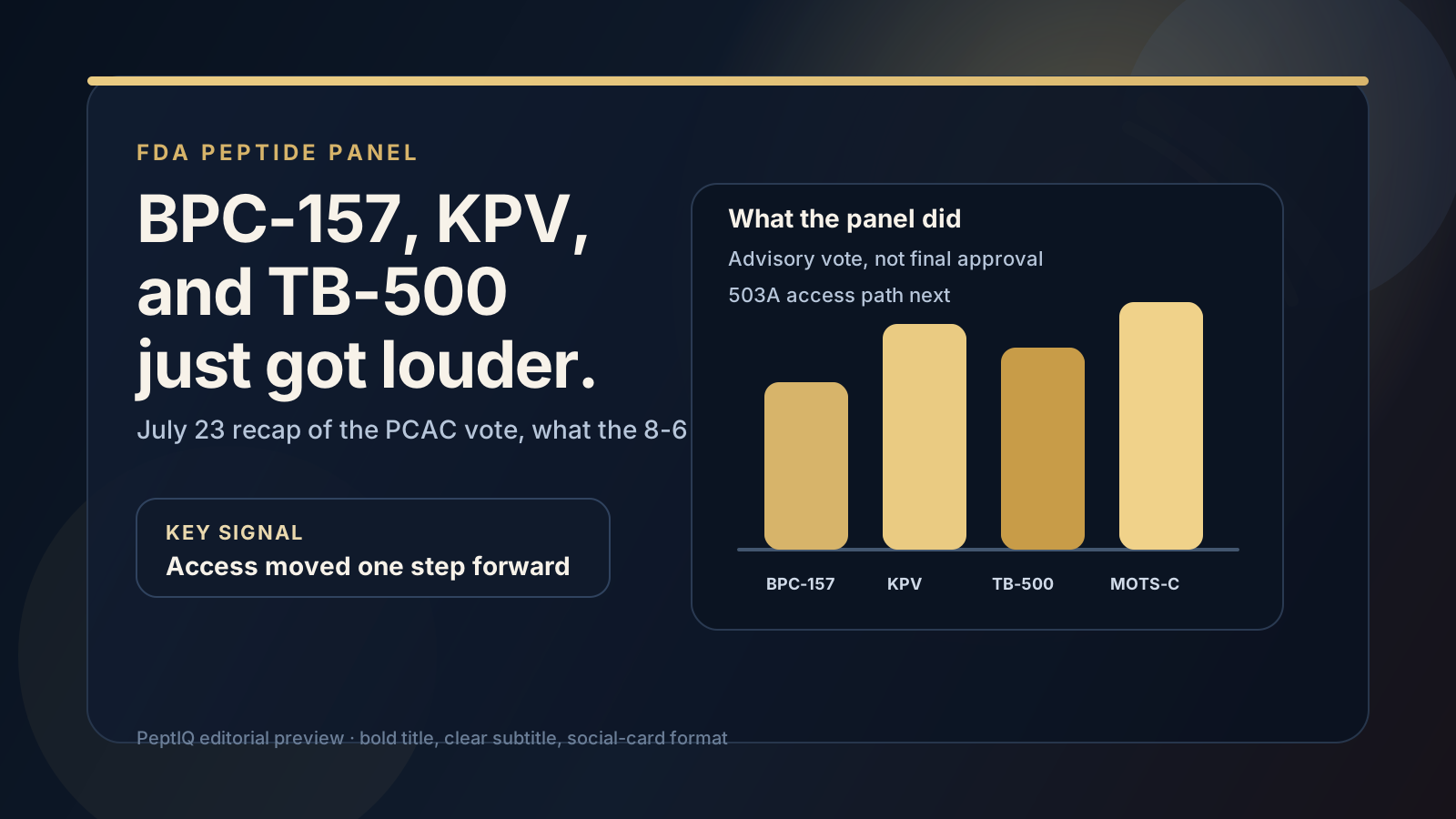
9mThe FDA's peptide panel made its first moves on BPC-157, KPV, and TB-500. The vote matters, but the real story is what it changes next and what still has to happen before compounding pharmacies see any relief.
 10m
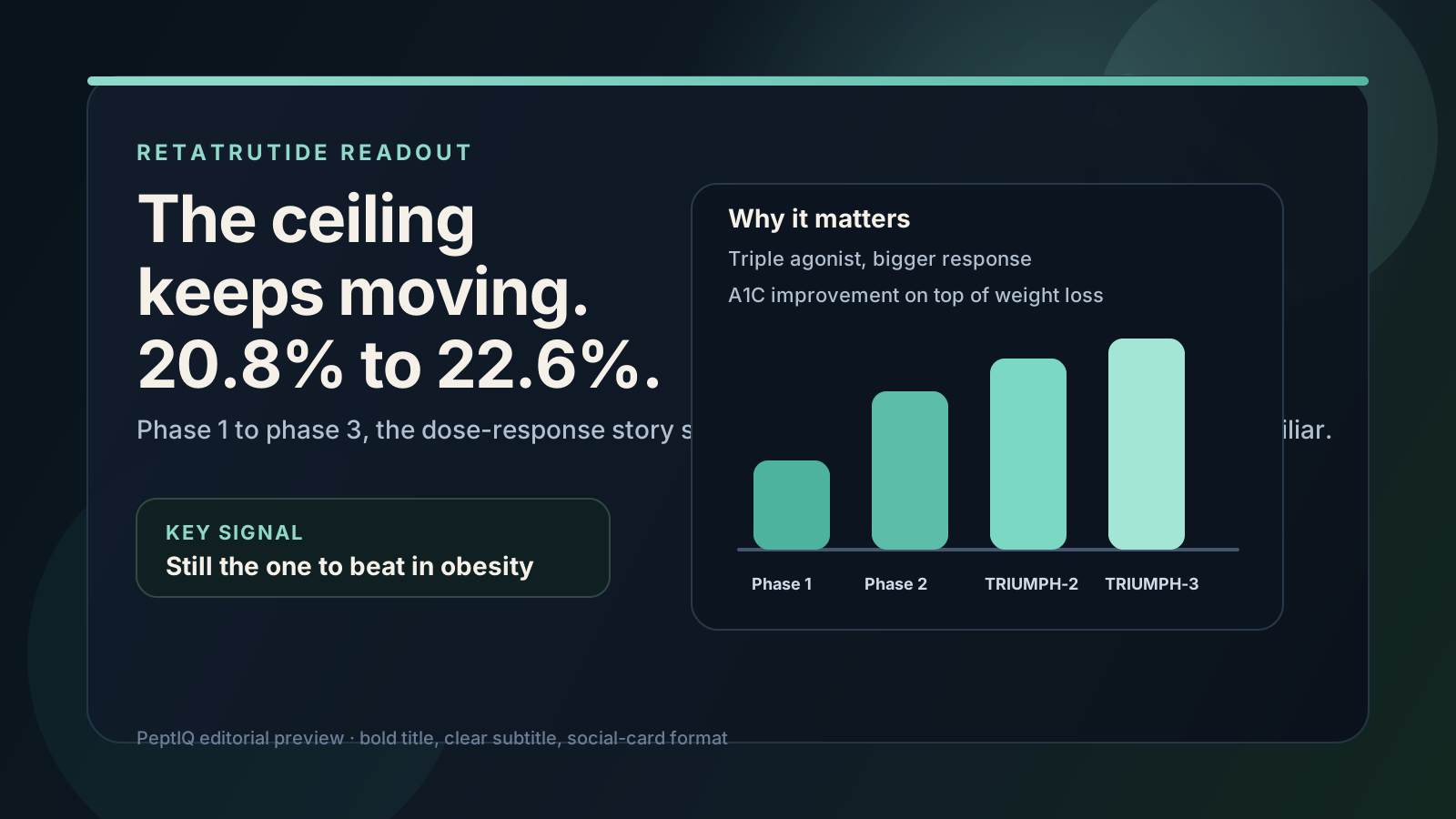
10mRetatrutide just posted two more strong phase 3 wins. The new numbers matter, but the bigger story is how phase 1, phase 2, and phase 3 now line up into one very clear dose-response story.
 8m
8mGHK-Cu is not a magic skin fix. It is a copper peptide with a real research trail behind collagen support, tissue remodeling, and wound healing.
 9m
9mThe new BPC-157 review is useful because it separates mechanism from marketing. The peptide looks biologically interesting, but the human evidence is still thin.
 10m
10mPet owners are hearing more about BPC-157 and TB-500 for recovery. This guide separates the real biology from the social-media hype and shows what actually matters for healing.
 9m
9mThe real test for retatrutide is not whether it moves the scale. It is whether it makes the plan easier to follow without flattening training, energy, or lean mass.
 9m
9mPeptides are not only treatment candidates anymore. New constrained ligands may help doctors see the tumor microenvironment more clearly, which changes how researchers think about diagnostics, targeting, and drug design.
 8m
8mRetatrutide's hype is not just about weight loss. The bigger story is the way a triple agonist can feel different, from warmth and energy expenditure to the GI side effects that shape adherence.
 9m
9mThe peptide conversation is crowded. The useful question is which signals keep showing up in the data and which ones are still mostly hype.
 9m
9mMOTS-C sits at the intersection of mitochondrial signaling, metabolism, and longevity. July 2026 put it back in the spotlight for a reason.
 8m
8mThe peptide space is loud. This snapshot cuts through the noise and focuses on the compounds that still have real biology behind them.
 8m
8mMOTS-C may help metabolic signaling in human cells, but the same signal could come with a repair cost. That matters for anyone reading the longevity hype.
 10m
10mThe most useful peptide research is not the loudest. It is the stuff that changes the question from 'does it work?' to 'who does it help, for what outcome, and with what tradeoffs?'
 8m
8mRegulation does not settle the peptide debate by itself. It forces clearer questions about sourcing, safety, evidence, and who is responsible when claims move faster than data.
 9m
9mHealthy aging is not a slogan. It is a measurable question about inflammation, tissue repair, metabolic control, and whether a peptide has human data behind it.
 8m
8mMOTS-c is not just a mitochondrial story. In human cells, the same signal that turns on metabolism may also dampen repair, which makes context matter.
 9m
9mThe best metabolic tools do more than move the scale. They change how easy it is to follow the plan on day 3, day 30, and day 300.
 10m
10mOrthopaedics is paying closer attention to peptides because the field keeps running into the same problem: recovery is biology, but biology still needs evidence before it becomes a protocol.
 9m
9mGLP-1 weight loss is not the same as automatic muscle loss. The real story depends on protein, resistance training, and tracking.
 9m
9mTesamorelin has one of the cleanest human-data stories in the peptide space. The new liver fat trial matters because it asks whether that signal extends into fatty liver disease.
 8m
8mThe scale is only part of the story. Retatrutide's biggest advantage may be how it quiets food noise and makes adherence easier to sustain.
 8m
8mGLP-1s can drive impressive weight loss, but the real win is losing fat without giving up strength. This guide shows how to protect lean mass while appetite is down.
 8m
8mScale weight is noisy. If you are using retatrutide, waist trend, body composition, protein intake, and strength matter more than a single weigh-in.
 12m
12mRetatrutide dominates H1 logging, the Wolverine stack is real, and quick-log onboarding predicts who actually tracks. Our first semi-annual data report from thousands of real peptide logs.
 9m
9mSports medicine keeps pulling peptides into the conversation because recovery pressure is real. The hard part is separating promising biology from weak evidence, gray-market hype, and antidoping risk.
 9m
9mClinical trials show the headline results. Real-world data shows what happens after the first prescription, after the side effects, and after people try to stay on therapy long enough to benefit.
 8m
8mGLP-1s can slow gastric emptying, which is why surgery teams now ask different questions. The key is to understand the risk without turning it into fear or hype.
 9m
9mMOTS-C sits at the intersection of mitochondrial signaling, glucose control, and recovery biology. Here is what the current research can actually support.
 9m
9mGHK-Cu is more than a cosmetic peptide. The interesting signal is tissue remodeling, matrix repair, and how that may matter for skin, hair, and recovery.
 8m
8mNew MOTS-C data points to something more specific than a generic metabolism story: better muscle mitochondrial efficiency. Here's what that means in practice.
 9m
9mRetatrutide's weight-loss signal is now strong enough that people are comparing it with surgery. That comparison is useful, but only if you understand what the numbers do and do not mean.
 9m
9mRetatrutide is no longer just a weight-loss story. The latest kidney-aware review sharpens the question: which metabolic patients need tighter monitoring, slower escalation, and better data?
 8m
8mMOTS-c is showing up in cardiac stress research. A new rat-heart study points toward mitochondrial bioenergetics, mtDNA integrity, and post-ischemic recovery.
 8m
8mMOTS-c is moving beyond generic energy claims. New research points toward mitochondrial stress response, lung inflammation, and cardiac reperfusion biology.
 8m
8mGLP-1 research is moving into healthspan and epigenetic aging. The new semaglutide signal is worth tracking, but it is not proof of age reversal.
 8m
8mMOTS-c is being studied beyond energy and metabolism. New research points toward tissue-stress biology, lysosomal stability, and cell survival under ischemic pressure.
 8m
8mGLP-1 research is moving beyond weight loss. New breast cancer risk and survival signals are interesting, but they need careful interpretation.
 8m
8mThe next metabolic peptide wave is not just stronger GLP-1 dosing. Amylin, GIP, glucagon, and combination protocols are changing what serious tracking should include.
 7m
7mGLP-1 therapy is no longer just GLP-1. CagriSema, cagrilintide, petrelintide, and amycretin show why amylin is becoming a serious metabolic target.
 8m
8mPeptide research is moving fast. Here is how to read the evidence before turning a headline, mechanism, or social post into a protocol.
 8m
8mNew 2026 data puts BPC-157 into a sharper recovery frame: oxidative stress, inflammation, apoptosis, angiogenesis, and the limits of animal evidence.
 8m
8mGLP-1 research is moving beyond weight loss. Recent ophthalmology studies suggest possible links with age-related macular degeneration, but the signals are mixed and need careful interpretation.
 8m
8mMOTS-c is moving beyond the generic energy peptide conversation. New 2026 research connects mitochondrial-derived peptides with atrial fibrosis, inflammation, and heart rhythm biology.
 8m
8mA new MOTS-c pilot study adds a vascular-health signal to the mitochondrial peptide conversation, but it should be read as biomarker research, not a protocol claim.
 7m
7mGLP-1 peptides are changing the bariatric surgery conversation. The practical lesson is not self-managing around surgery. It is better tracking, clearer handoffs, and coordinated medical planning.
 8m
8mGHK-Cu is moving beyond skin-care hype into a controlled wound-healing study. Here is how to read the Phase 2 trial without overclaiming the result.
 8m
8mMOTS-c is one of the most interesting mitochondrial peptides in 2026 because the question is finally shifting from mechanism to human outcomes.
 8m
8mThe new TRIUMPH-1 readout gives retatrutide users a clearer dose-response map: 4 mg, 9 mg, and 12 mg all worked, but the tolerability tradeoffs matter.
 8m
8mThe July 2026 FDA peptide review is important, but it is not an approval event. Here is how to track the meeting, sourcing changes, and protocol decisions without confusing policy movement with clinical proof.
 7m
7mThe biggest peptide trend in 2026 may not be a molecule. It may be oversight, sourcing quality, and the ability to separate evidence from marketing.
 7m
7mA 2025 Biomaterials Research paper shows GHK-Cu hydrogel achieving full infected wound healing — antibacterial, anti-inflammatory, and neovascularization effects. Here's what the mechanism actually means for regenerative protocols.
 8m
8mGLP-1 receptor agonists cause nausea in up to 44% of users and it is the top reason for discontinuation. Here is what the research shows about BPC-157 as a potential gut protectant, and where the evidence stops.
 7m
7mTwo 2026 peer-reviewed reviews in Sports Medicine and JAAOS now formally catalog BPC-157, TB-500, GHK-Cu, CJC-1295, and Ipamorelin stacks. Here is what the science actually shows — and where the gaps still are.
 7m
7mMOTS-c is a peptide encoded in your mitochondrial DNA that declines with age and mimics exercise benefits in animal studies. NAD+ has actual human clinical data. Here's what 2026 research shows about why these two molecules may work together — and what's still missing.
 7m
7mDapiglutide is not another simple GLP-1 copycat. The early 2026 trial missed statistical significance for weight loss, but the mechanism points toward the next phase of peptide design.
 8m
8mNew head-to-head trials and real-world data from 2025-2026 reveal tirzepatide and semaglutide are not equivalent - they produce meaningfully different outcomes depending on your goals.
 7m
7mA 2025 Biomolecules review highlights the hardest GLP-1 question: what happens after the weight comes off? Maintenance needs a plan before the final dose.
 7m
7mAfter 30+ years of animal research and 212 preclinical studies, BPC-157 has entered its first Phase 2 human trial. Here's what it will test, what it won't prove, and what to track.
 7m
7mAMA and FDA updates make one thing clear: peptide interest is moving faster than human evidence, dosing standards, and product-quality controls. Use this checklist before trusting a vial.
 9m
9mSLU-PP-332 is a small-molecule ERRα agonist with remarkable endurance, fat oxidation, and mitochondrial benefits. Here's the complete guide to what it does, who it's for, and how to use it.
 8m
8mSelank and Semax are two of the most powerful intranasal nootropic peptides available. Here's how they work, how they differ, and the best protocols for using them separately or stacked.
 8m
8mStack stories spread fast because they are visual and emotional. The smarter move is not to copy the protocol. It is to ask better evidence questions.
 9m
9mSemax is an ACTH-derived peptide that upregulates BDNF and supports neuroprotection. Here's what the research actually shows — and how to track your cognitive protocol.
 8m
8mTesamorelin has one of the stronger human-data profiles in the peptide space. A 2026 meta-analysis helps clarify what it improves, what it does not, and how to track the signal honestly.
 7m
7mA new 2026 meta-analysis puts real numbers on lean mass change during semaglutide, tirzepatide, and liraglutide weight loss. The practical takeaway is not panic. It is better tracking.
 8m
8mBPC-157 finally has a registered human sports-injury study. The signal is important, but it is not proof yet. Here is how to read the trial without the hype.
 8m
8mA new ECRI and ISMP warning says popular wellness peptides are being marketed faster than the evidence can support. Here is how to separate compound science from product risk.
 8m
8mHealth Canada's 2026 public advisory names unauthorized injectable peptides sold online and explains why product quality, legal status, and medical supervision matter.
 8m
8mRetatrutide is no longer just a weight-loss headline. Current 2026 trial records show researchers testing broader questions: pain, liver disease, cardiorenal risk, dose escalation, and lean-mass preservation.
 8m
8mA new sports medicine review puts injury-recovery peptides in context. Some mechanisms are promising, but human evidence, safety data, and regulatory status still matter.
 8m
8mNew 2026 reviews show a nutrition gap in GLP-1 and incretin therapy research. Here is how to protect protein intake, lean mass, hydration, and labs while appetite is suppressed.
 7m
7mEfsubaglutide alfa is a long-acting GLP-1 receptor agonist with new human trial data in drug-naive type 2 diabetes. Here is what the SUPER1 results actually show.
 7m
7mEDS changes the safety conversation around peptides. GHK-Cu, BPC-157, and TB-500 are discussed for tissue support, but EDS plus cardiac history should stay clinician-led.
 9m
9mThe TRIUMPH-4 trial delivers groundbreaking dual benefits: 28.7% body weight reduction plus significant osteoarthritis pain relief. Retatrutide's triple mechanism may solve two problems simultaneously.
 9m
9mA torn meniscus and Baker cyst — both resolved without surgery. This Reddit case report shows what BPC-157 and TB-500 can do for knee injuries. But the clinical picture is more complicated than a success story.
 5m
5mEducational reconstitution math for NAD+ vials: how diluent volume changes concentration, with worked examples that are not a universal mix or dosing protocol.
 7m
7m31% body weight loss in a trial participant. Not an average — an individual result. But when 39.4% of Phase 3 participants on the 12mg dose hit the same milestone, the outlier becomes a pattern.
 9m
9mFood noise — that constant mental chatter about food — often comes back after stopping GLP-1 peptides. Here's the science of why, and what actually helps: maintenance strategies, stacking options, and realistic expectations.
 8m
8mYou got your first peptide vials and now you are staring at two bottles of powder and a box of needles. Here is exactly how to mix BPC-157 and TB-500 without overthinking it.
 9m
9mNew Phase 3 data shows Retatrutide nearly doubled the weight loss results of current GLP-1 drugs without hitting a plateau.
 11m
11mBPC-157 and TB-500 are the most researched peptides for connective tissue repair—but combining them requires understanding their different mechanisms. Here's the complete stacking protocol based on actual user experience.
 8m
8mThe FDA's April 2026 announcement removed 12 peptides from Category 2 restrictions — the biggest regulatory shift in years. BPC-157, TB-500, MOTS-C, GHK-Cu, and Semax are among those affected. Here's what it actually means for your access.
 7m
7mMOTS-C has a real adjustment period. Here's why weeks 1-2 can feel rough, when the energy kick in, and how to maximize the transition.
 8m
8mSeven FDA warning letters in April 2026 show regulators are paying closer attention to online peptide sellers, especially research-use-only marketing that looks like consumer health claims.
 7m
7mWomen have unique considerations with peptides, from hormones and cycle changes to muscle retention, recovery, skin health, and tracking.
 9m
9mYou don't need to have diabetes to benefit from GLP-1 therapy. A comprehensive 2026 systematic review confirms what the peptide community has known for years — and the results are striking.
 8m
8mMOTS-C timing affects AMPK activation and metabolic benefits. Learn whether to take it fasted, how long to wait before eating, and how to optimize timing for AM or PM training schedules.
 9m
9mPsoriasis affects 125 million people worldwide. While peptides aren't a cure, emerging research suggests certain compounds may help calm inflammation and support skin repair. Here's what the science says.
 8m
8mFour to six weeks on Retatrutide with a flat scale is common. Audit dose, intake, measurements, and product handling before you assume the peptide failed.
 9m
9mAfter years of FDA crackdowns on research peptides, a significant regulatory reversal in 2026 has changed the landscape for BPC-157, TB-500, and MOTS-C. Here's what actually happened and what it means for you.
 8m
8mConfused about peptide compounding categories? This guide breaks down 503a compounding pharmacies, 503b outsourcing facilities, and why “research use only” is not a consumer pathway PeptIQ endorses.
 8m
8mMost people fighting hair loss default to minoxidil. But a 2022 clinical trial showed a 0.5% GHK-Cu serum increased hair count by 22% over 16 weeks — beating 3% minoxidil. And GHK-Cu doesn't just grow hair. It works at the genomic level.
 8m
8mFinished your GLP-1 cycle and want to maintain metabolic momentum? MOTS-C is one of the most effective peptides for supporting fat oxidation and energy during GLP-1 off-cycles. Here's how to dose and time it.
 7m
7mOn April 15, 2026, the FDA announced it will remove injectable GHK-Cu from Category 2 — the list that blocked compounding pharmacies from producing it. This is a major regulatory shift for one of the most studied copper peptides in longevity research.
 8m
8mThe MOTS-C dosing debate is real: 0.5-1mg daily vs 5mg 2-3x weekly. Both protocols have their advocates. Here's what the research says, why context matters, and how to choose the right approach for your situation.
 9m
9mAlready on Reta and ready to add compounds? Here's how to stack Tesamorelin and MOTS-C with Retatrutide for maximum fat loss and recomp.
 7m
7mPeptide therapy searches on TikTok jumped 459% in early 2026. Here's what's driving the explosion, which peptides are trending, and what you need to know before you start.
 9m
9mAlready on tirzepatide and considering retatrutide? Here's exactly how to make the switch—starting doses based on your current Tirz level, what the glucagon component changes, and how to avoid common transition mistakes.
 7m
7mGrok says subQ Cerebrolysin doesn't work due to volumes. The real answer is more nuanced — and subQ is viable at research doses if you use the right solvent.
 9m
9mRunning Retatrutide and wondering what to add? This guide breaks down how MOTS-C, SS-31, AOD-9604, and SLU-PP-332 layer onto a GLP-1 protocol — and why they're not redundant.
 9m
9mFor years, GLP-1 therapy meant a weekly injection. The FDA just changed that. Foundayo is the first oral GLP-1 approved for weight management, and the implications for the peptide community go far beyond convenience.
 10m
10m5-Amino-1MQ blocks NNMT instead of suppressing appetite. This guide covers oral dosing ranges and why people stack it with GLP-1s and MOTS-C for stubborn visceral fat.
 9m
9mMOTS-C activates AMPK through mitochondrial signaling. NAD+ feeds the cellular energy substrate. Together, they hit the same system from two different angles — and the results are additive.
 6m
6mBAC water works for most peptides. Acetic acid is for hydrophobic compounds that won't dissolve in BAC. Sterile water only for certain compounds like Cerebrolysin. Here's how to choose and troubleshoot.
 9m
9mEveryone focused on the 71-pound weight loss stat from TRIUMPH-4. But the buried finding — 75.8% reduction in knee pain scores — may be the more important number for anyone living with joint pain.
 9m
9mThe FDA's April 15, 2026 reclassification of 12 research peptides marks the most significant regulatory shift in the space since the 2023 compounding crackdown. Here's a breakdown of the affected compounds, the new compliance landscape, and how to think about your protocol going forward.
 10m
10mMOTS-C activates AMPK and drives mitochondrial adaptation — but does daily use over months cause your body to stop responding? Here's what the research and user experience actually says about long-term MOTS-C protocols.
 8m
8mMOTS-C is mitochondria-encoded and activates AMPK through a pathway that's less prone to classic receptor downregulation. Here's how to structure long-term use for sustained results.
9mMost peptide users eventually ask: BAC or sterile water? This guide breaks down tradeoffs, timing, and practical decision rules with a peptide-by-peptide reference workflow.
 10m
10mAn FDA advisory panel scheduled for July 2026 could reshape access to 12 peptides — including BPC-157, MOTS-C, and GHK-Cu. Here's what's on the table, what reclassification would mean in practice, and how to prepare for either outcome.
 11m
11mKLOW combines BPC-157, TB-500, and GHK-Cu into a single injection. Convenient for maintenance — but knowing when to switch to separate vials can make the difference between results and stalled recovery.
 9m
9mEpitalon is a synthetic tetrapeptide developed from pineal gland extract that activates telomerase and has decades of Khavinson research behind it. Here's what it does, how to dose it, and how to stack it.
 9m
9mGHK-Cu has long been known for its skin and healing benefits. A fresh April 2026 preprint adds a surprising new dimension — cognitive aging reversal in mouse models via BDNF upregulation and neuroinflammation suppression.
 9m
9mHitting a plateau on Retatrutide is common and usually temporary. Here's the science behind GLP-1 stalls and the practical steps to break through them.
 9m
9m87.5% of patients with chronic knee pain reported significant relief after BPC-157 treatment at the 6–12 month follow-up. Here's a breakdown of the human trial data, the dosing protocol used, and why this peptide is getting serious clinical attention.
 10m
10mBPC-157 and TB-500 are the two most evidence-backed peptides for structural tissue repair. For herniated disc recovery, they work through complementary pathways — here's how to stack them, dose them, and phase in the rest of a recovery protocol.
 9m
9mCJC-1295 with DAC lasts ~6–8 days (weekly pins). Without DAC (Mod GRF 1-29) lasts ~30 minutes and needs co-injection with Ipamorelin. Comparison table, doses, and which to pick.
8mMost people who take NAD+ daily wonder whether they should cycle it. The answer isn't black and white — it depends on your dose, delivery method, and goals. Here's what the research and community experience actually suggest.
 8m
8mAOD-9604 is a synthetic fragment of human growth hormone designed specifically to stimulate fat breakdown without the glucose or IGF-1 side effects of full HGH. Here's how it works and who it's for.
 8m
8mEpithalon is one of the most researched longevity peptides in existence, with decades of clinical data behind it. This guide covers the science of telomere elongation, dosing options, cycling protocols, and how it fits into a modern anti-aging stack.
 8m
8mA Stanford AI tool screened 2,600 uncharacterized peptides and identified BRP — a 12-amino acid molecule that cuts food intake by up to 50%, promotes fat burning, and avoids the nausea, constipation, and muscle loss common with GLP-1 drugs. Here's what the research actually shows.
 10m
10mMost peptide guides are written with a 35-year-old man in mind. If you're a woman in your 40s or 50s lifting hard and trying to recomp, the stack looks different. Here's what the research actually supports.
 9m
9mIGF-1 LR3 is one of the most potent muscle-building peptides available — but it's also one of the most commonly misdosed. Here's how to actually run it.
 9m
9mTesamorelin is an FDA-approved GHRH analog with clinical trials proving 15–20% visceral fat reduction. Here's the full science, dosing guide, and what the latest research reveals about its longevity applications.
 9m
9mCJC-1295 and Ipamorelin are two of the most popular GH secretagogues used together. This guide explains the differences between CJC with DAC and without DAC, how to dose them, and how to build the right protocol for your goals.
 10m
10mMost people know GHK-Cu for skin and wound healing. What they don't know: it's one of the most potent epigenetic regulators ever studied, influencing over 4,000 human genes — many tied directly to aging, inflammation, and tissue repair.
 9m
9mAfter years of regulatory limbo, BPC-157 is at the center of a major policy battle. The RFK Jr.-led HHS push to reclassify it as Category 1 could restore legal compounding access—or the FDA could dig in. Here's where things stand.
 9m
9mCerebrolysin is a brain-derived peptide mixture used for neuroprotection and cognitive enhancement. Here's what the research says, how to reconstitute it, and what real protocols look like.
8mIGF-1 LR3 and HGH are often grouped together, but they act at different points in the GH/IGF-1 axis. Here is the protocol-level breakdown for clinicians, athletes, and longevity-focused users.
 7m
7mMOTS-C is one of the most studied mitochondrial peptides for metabolic health and longevity. This guide covers dosing ranges, frequency, timing, stacking options, and what to track on protocol.
 9m
9mMOTS-c — a peptide synthesized inside your own mitochondria — is now in Phase 2a human trials for prediabetes. Early data suggests it improves insulin sensitivity and metabolic flexibility without the side effects of pharmaceutical interventions.
 10m
10mPhase 3 trial data is in: retatrutide delivers 28.7% average body weight reduction, outpacing every approved GLP-1 therapy. The numbers tell a clear story about where metabolic medicine is heading.
 8m
8mSS-31 and MOTS-C target mitochondrial health from two different angles. Here's how to run them together, when to introduce each, and what to expect.
 8m
8mA complete breakdown of Dihexa — mechanism of action, dosing, what users actually report, and how it compares to Semax and Selank for cognitive enhancement.
 9m
9mA 2026 Phase 2 clinical trial confirms GHK-Cu achieves 25% faster wound closure and tissue regeneration versus control. Discover how this naturally occurring copper peptide triggers stem cell activity, collagen synthesis, and anti-inflammatory cascades.
9mDiscovered inside mitochondrial DNA itself, MOTS-c is one of the most fascinating longevity peptides in modern science. It governs how your cells produce energy, fight fat accumulation, and age.
 6m
6mOne of the most common beginner questions: can you draw multiple peptides into the same syringe? The answer depends on the combination. Here's the complete guide.
 9m
9mA potential FDA regulatory shift on 14 compounded peptides — including BPC-157 and TB-500 — could reshape who gets access to peptide therapy and how. Here's what the current signals actually mean.
 8m
8mNAD+ and peptides like BPC-157, MOTS-C, and KLOW work through completely different pathways — which is exactly why they stack well. Here's how to combine them safely and effectively.
 10m
10mThe largest systematic review of BPC-157 to date analyzed 36 studies and confirmed consistent healing outcomes across tendons, ligaments, bone, and muscle tissue. Here's what the data shows.
8mBoth MOTS-C and GHK-Cu are popular among serious lifters over 50 — but they work through completely different mechanisms. Here's how to choose, and why the best answer is often both.
10mThe biggest risk with GLP-1 weight loss drugs isn't the fat loss — it's the muscle you lose with it. Strategic peptide stacking can tip the balance toward true body recomposition.
 9m
9mEverything you need to know before your first retatrutide injection — reconstitution math, dose calculations, injection technique, and what to expect if you have prior GLP-1 sensitivity.
 11m
11mA 2026 meta-analysis comparing retatrutide to GLP-1 (Ozempic/Wegovy) and tirzepatide shows retatrutide delivers 28% superior fat loss. Here's the science behind why the triple-agonist approach is reshaping weight loss and body recomposition.
 7m
7mGHK-Cu is one of the most researched anti-aging peptides available. Here's a practical dosing guide covering protocols, cycle length, stacking, and what to realistically expect.
8mReconstituting peptides is simpler than it looks. This guide walks you through every step — from choosing the right BAC water volume to calculating units on your insulin syringe.
 9m
9mPhase 3 data is in: retatrutide produced an average 28.7% body weight reduction — roughly 71 lbs — in the TRIUMPH-4 trial. Here's what the numbers mean and how the triple agonist mechanism drives these results.
 10m
10mTB-500 has moved from rodent models to human cardiac recovery trials. The 2026 data is early, but the mechanism and results are worth understanding — especially if you're using TB-500 for recovery.
 11m
11mBPC-157 activates multiple tissue repair pathways simultaneously. Users report faster recovery from injury, improved gut healing, enhanced joint mobility—backed by published clinical data.
 10m
10mTRANSCEND confirmed retatrutide as the most effective GLP-1 class compound tested in late-stage trials. 16.8% mean body weight reduction and a 2.0-point A1C drop in 40 weeks — here's what the full data shows.
 9m
9mBPC-157 accelerates tissue repair by stimulating angiogenesis and collagen synthesis. Here's what the research shows and what users need to know.
 9m
9mMOTS-C is the first peptide found encoded in mitochondrial DNA. It activates AMPK, mimics exercise-induced metabolic adaptations, and may be one of the most powerful tools for metabolic optimization available.
 10m
10mRetatrutide's triple receptor mechanism simultaneously suppresses appetite, enhances metabolic function, and activates thermogenesis. Here's the science behind why it delivers 24% body weight reduction.
 14m
14mThe peptide space is shifting from weight loss toward longevity. Explore the science behind peptides designed to slow aging, repair cellular damage, and extend healthspan.
 10m
10mThe peptide space is evolving rapidly. Here's what researchers are discovering, which new compounds show promise, and what breakthroughs could hit the market soon.
 12m
12mNew to retatrutide? Reconstitute the vial, calculate units, then titrate weekly from a conservative start. This is the single beginners hub for mix math and dosing.
 10m
10mRetatrutide is not just a stronger tirzepatide. It's a fundamentally different molecule with three receptor targets instead of two. Here's how each mechanism contributes to rapid fat loss, metabolic optimization, and muscle preservation.
 10m
10mRapid fat loss typically means muscle loss. But retatrutide's triple action—including glucagon receptor activation—preserves more lean mass than tirzepatide or GLP-1-only compounds. Here's the science.
12mRetatrutide and tirzepatide dominate the peptide conversation, but they're not interchangeable. Here's what the latest clinical research reveals about their differences, efficacy, and mechanisms.
 10m
10mBPC-157 is showing remarkable promise in clinical research for rapid tissue regeneration. Learn how this pentapeptide works, what the data shows, and whether it's right for your recovery protocol.
 8m
8mNew Phase 3 data shows retatrutide delivering superior metabolic benefits. Here's what researchers found and why it matters.
 10m
10mRetatrutide, the triple-action GLP-1/GIP/glucagon receptor agonist, outperforms tirzepatide by 23% in the latest human clinical trial—the most comprehensive weight loss comparison to date.
 10m
10mRetatrutide is a next-generation weight loss peptide targeting three metabolic pathways. Here's how it works and why it outperforms earlier GLP-1 therapies.
12mBPC-157 shows promise in clinical research for accelerating tendon repair and recovery. Learn how this peptide works and what the science says about its efficacy.
10mMOTS-C activates mitochondrial function and metabolic pathways linked to longevity and improved physical performance.
 12m
12mBPC-157 is the most versatile healing peptide available. Here's how it works and how to use it effectively.
 12m
12mGLP-1 agonists have revolutionized metabolic health. Learn how these peptides work, their effects on metabolism, and how to use them strategically for body composition goals.
 9m
9mRetatrutide is showing remarkable 2-year durability for weight loss. Here's what the science says and what it means for your protocol.
 18m
18mFrom BPC-157 and GLP-1 agonists at the top to overhyped flops at the bottom — here's every major peptide ranked for 2026 across fat loss, skin, longevity, and recovery.
 8m
8mDiscover the science behind peptides, their role in the body, and why they're revolutionizing health optimization.
 10m
10mThe complete guide to safely reconstituting peptides, including dosage calculations and best practices.
 12m
12mExplore the healing peptide BPC-157, nicknamed the 'Wolverine peptide' for its remarkable regenerative properties.
 10m
10mDiscover how TB-500 promotes tissue repair, reduces inflammation, and supports recovery from injuries.
 9m
9mExplore why Ipamorelin is considered the gentlest yet effective growth hormone releasing peptide available.
 8m
8mLearn where and how to inject peptides safely with our comprehensive injection site guide and rotation protocol.
 7m
7mMaximize your peptide investment with proper storage techniques that maintain potency and extend shelf life.
9mLearn why Sermorelin is a popular choice for natural GH optimization and anti-aging protocols.
 11m
11mExplore how Semaglutide has revolutionized weight management through GLP-1 receptor agonism.
 10m
10mDiscover why Tirzepatide's dual mechanism is producing record-breaking weight loss results in clinical trials.
8mProtect yourself by learning how to verify peptide quality, understand testing reports, and avoid dangerous products.
8mDiscover how PT-141 works through a unique mechanism to enhance sexual desire and function.
11mDiscover which peptides work synergistically together and how to stack them safely for enhanced benefits.
 7m
7mUnderstand why bacteriostatic water is essential for peptide reconstitution and how to use it properly.
 12m
12mDiscover the scientific foundation behind using GH peptides for anti-aging and longevity optimization.
 9m
9mLearn about Melanotan 2, the peptide that stimulates melanin production for UV-free tanning effects.
8mDiscover how AOD-9604 targets fat metabolism specifically, offering a focused approach to body composition.
8mUnderstand the science of peptide cycling and how to structure breaks for optimal long-term results.
7mLearn how to select the perfect insulin syringe for your peptide protocol with our comprehensive guide.
 9m
9mLearn about common peptide side effects, how to minimize them, and when they require attention.
 8m
8mDiscover Tesamorelin, the only FDA-approved GHRH peptide, specifically indicated for reducing visceral fat.
 10m
10mDevelop the skills to critically evaluate peptide research and distinguish solid science from marketing hype.
 7m
7mLearn how to safely travel with your peptides while maintaining proper storage and navigating legal considerations.
Also available at /blog for legacy links.