FDA's July 23 Peptide Panel Backed BPC-157, KPV, and TB-500. Here Is What Happens Next.
The FDA's July 23, 2026 Pharmacy Compounding Advisory Committee meeting moved BPC-157, KPV, and TB-500 one step closer to regulated compounding access. Here's what the votes mean, what gets discussed tomorrow, and what the FDA still has to decide.
PeptIQ Team
Peptide Research & Education
Interactive signal board
Committee signal
8-6
Day-one recommendation count
From restriction to structured access
The committee did not bless the compounds outright. It moved them into a narrower, more defensible compounding conversation.
Vote breakdown
Compound navigator
BPC-157
Ulcerative colitis
8-6 recommendation moved it toward regulated compounding review
The panel treated BPC-157 as a use-specific question, not a blanket peptide verdict.
Evidence
The committee reviewed the nominated use, the literature, and the compounding angle.
Vote
Day one ended with an 8-6 recommendation on the key peptide items.
Tomorrow
The next session covers DSIP / Emideltide, Semax, and Epitalon.
Afterward
FDA still has to turn the committee signal into actual regulatory language.
Tomorrow's agenda
DSIP / Emideltide, Semax, and Epitalon stay on deck. If the committee keeps the same evidence-first rhythm, the pattern matters as much as the vote count.
PeptIQ app
Track your peptide protocols in PeptIQ
Log injections, vial supply, and reminders. Use peptiq.io calculators when you need math on the web.
Under 25? Talk to a licensed clinician and get baseline labs before starting anything. Why we say this · Labs checklist
# FDA's July 23 Peptide Panel Backed BPC-157, KPV, and TB-500. Here Is What Happens Next.
> Note: PeptIQ is not a medical provider. This article is for educational purposes only. Regulatory timelines change fast, and nothing here is legal advice.
The FDA's Pharmacy Compounding Advisory Committee met on July 23 and July 24, 2026, but the first day already gave the peptide community a clear signal.
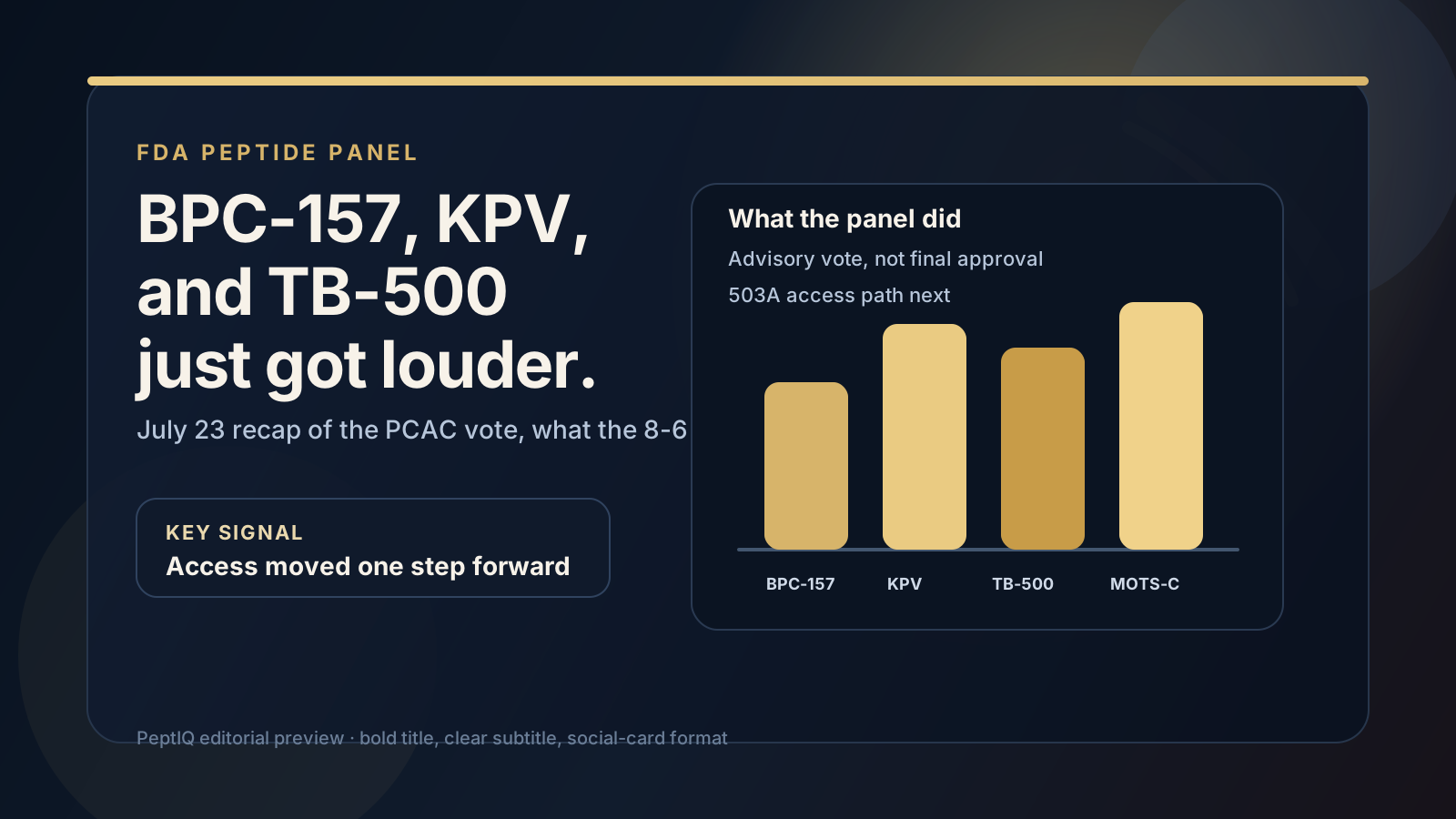
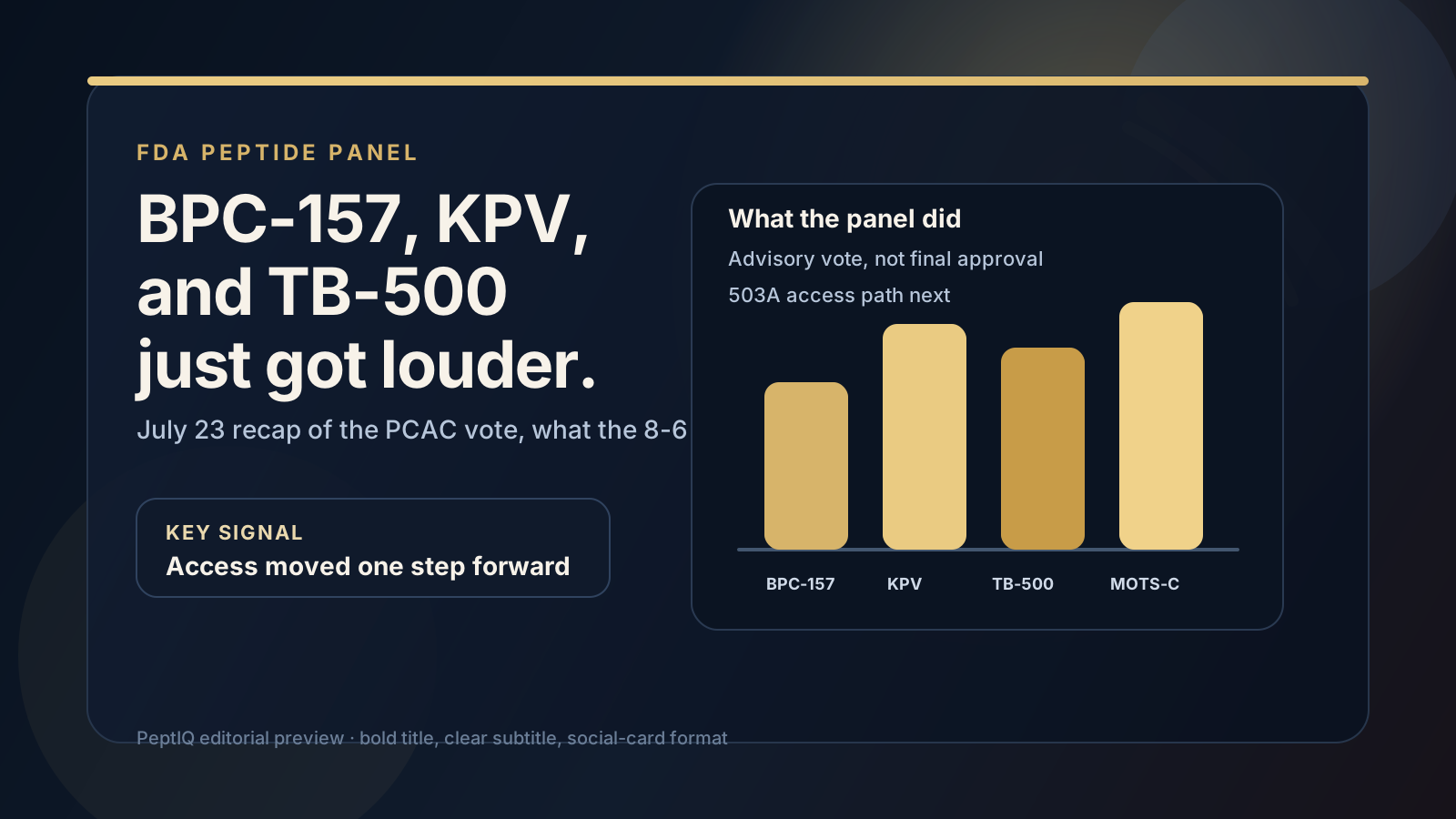
BPC-157, KPV, and TB-500 were the center of the discussion on day one. Public reporting from the meeting indicates the committee voted 8-6 to recommend easier access for those compounds through the 503A bulk drug substances process.
That sounds like a regulatory footnote. It is not.
For the people who care about peptide access, compounding quality, and the future of clinic-based prescribing, this is the kind of vote that can move a market.
> The committee did not approve the compounds. It changed the lane they can travel in.
The interactive panel above lets you step through the vote, the compounds, and the timeline instead of flattening the meeting into a one-line headline.
What The Committee Actually Reviewed
FDA's July 23 agenda focused on bulk drug substances being considered for inclusion on the 503A Bulks List.
The substances discussed on day one were:
BPC-157-related bulk drug substances, with ulcerative colitis as the nominated use
KPV-related bulk drug substances, with wound healing and inflammatory conditions as the nominated use
TB-500-related bulk drug substances, with wound healing as the nominated use
MOTS-C-related bulk drug substances, with obesity and osteoporosis as the nominated use
The FDA page is clear on the structure of the meeting. The committee's role is to review the evidence and make a recommendation. That recommendation is not the same thing as a final rule.
The day had a simple rhythm:
Evidence
Debate
Vote
Follow-up
That is the part most people miss when they reduce a meeting like this to a headline. The headline is the vote count. The story is the path it opens or closes.
Why The Vote Matters
The important distinction is this:
An advisory committee vote can change the direction of the process. It does not instantly change the law.
If the FDA follows the panel's recommendation, the compounds can move closer to regulated pharmacy access through 503A compounding pharmacies. That means a cleaner supply chain, more consistent dosing, and less dependence on gray-market sourcing.
That would be a meaningful shift for:
clinicians who want a pharmacy-grade option
patients who want a more legitimate path
compounders who need regulatory clarity
researchers who care about standardization
It would not mean the compounds are "approved" drugs.
It would not mean self-experimentation becomes a good idea.
It would mean the FDA is moving from pure restriction toward a narrower, evidence-based access model.
What The Day-One Result Signals
The pattern is as important as the individual vote.
BPC-157, KPV, and TB-500 are all compounds people already talk about in recovery and inflammation circles. The committee did not give them a blank check. It evaluated specific nominated uses and decided the evidence was strong enough to recommend a path forward.
That matters for two reasons.
First, it shows the committee is not ignoring the real-world demand for these compounds.
Second, it suggests the FDA is willing to sort peptides by use case instead of treating the whole category as one monolith.
That is a more precise regulatory world than the one most users are dealing with now.
Reading The Signal Like A Reporter, Not A Comment Thread
The best way to understand the meeting is to separate three layers:
Layer
What it tells you
What it does not tell you
Committee vote
The direction of expert sentiment
Final FDA policy
503A pathway
Where compounding could move
Instant access
Public discussion
How the market reacts
What the FDA must do next
That filter matters because these stories get flattened fast. A vote can sound final when it is really only directional.
What Gets Discussed Tomorrow
July 24 is the second half of the meeting, not the cleanup lap.
The FDA agenda for tomorrow includes:
Emideltide, also called DSIP, for opioid withdrawal, chronic insomnia, and narcolepsy
Semax for cerebral ischemia, migraine, and trigeminal neuralgia
Epitalon for insomnia
Tomorrow matters because it tells you whether the committee is using a broad, permissive stance or a narrow, evidence-specific one.
If the votes stay consistent, the message is simple: the FDA wants a tighter relationship between the evidence base and the claimed use.
What To Watch After The Meeting
The meeting itself is not the final step.
After the panel, watch for:
FDA's formal response to the committee recommendations
Updated docket language or follow-up notices
Whether 503A access language changes for the nominated substances
Whether compounding pharmacies begin preparing for a narrower, cleaner supply path
The big mistake would be to read a committee vote as instant availability.
That is not how this process works.
The real change happens when the FDA translates the vote into actual regulatory language.
What It Means For Peptide Users
If you are already using peptides, this kind of news is a reminder to think in systems, not headlines.
The useful questions are:
Is the compound being sourced through a defensible channel?
Is the dose consistent?
Is the protocol tracked?
Is the use case actually aligned with the evidence?
PeptIQ exists for that exact reason. It helps turn a peptide stack into something you can review instead of just remember.
Frequently Asked Questions
Q: Did the FDA approve BPC-157, KPV, or TB-500 today?
A: No. The committee vote is a recommendation, not final FDA approval.
Q: Does the 8-6 vote mean the compounds are definitely going to be added to the 503A list?
A: No. It means the committee recommended moving them forward. The FDA still has the final call.
Q: What does 503A access change in practice?
A: It can open a regulated compounding path through licensed pharmacies, which is a cleaner channel than gray-market sourcing.
Q: What is on the FDA agenda tomorrow?
A: DSIP/Emideltide, Semax, and Epitalon.
Q: Does this mean people should start using these peptides on their own?
A: No. Any actual use should be discussed with a qualified clinician.
Bottom Line
The July 23 FDA meeting was not a vague "peptides are back" moment.
It was a specific yes vote on specific compounds for specific uses, with a second day still ahead and a final FDA decision still to come.
That is how real regulatory change usually works. It moves in steps, not announcements.
If you want to track the next step, watch the FDA response, not the social media recap.