


Loading lessons…
Loading lessons…
Curated lessons across 8 learning paths — from first concepts to trial summaries and practical protocols. Pick your level, follow the curriculum, and build real understanding.
Where are you starting?
Choose a learning path below or search the library. Progress saves in your browser.
Prefer timeline chaos? Peptide X Quiz · Literacy certify
Pick a track — progress rings update as you complete lessons.
25 lessons
 6m
6mAdamax is marketed as a modified Semax. Semax has decades of mostly Russian research. Adamax has essentially none in the published literature. Here's the honest comparison.
 7m
7mThe panel backed six peptide nominations but not Emideltide. Here is why evidence and identity questions mattered, and what the result means for people following sleep peptides.
 7m
7mEpitalon received a narrow advisory vote for 503A compounding in insomnia. That vote is not FDA approval, immediate access, or validation of longevity claims.
 7m
7mA beginner-friendly guide to KPV, its relationship to alpha-MSH, the evidence behind its nominated uses, and the limits of the 2026 PCAC recommendation.
 7m
7mMOTS-c now has a favorable advisory recommendation. It still does not have FDA drug approval or an open 503A compounding path.
 7m
7mPCAC recommended BPC-157, KPV, TB-500, MOTS-c, Semax, and Epitalon for 503A compounding. The unresolved fight is what happens while FDA completes rulemaking.
 7m
7mThe favorable Semax vote moved its compounding nomination forward, but the narrow result exposed unresolved questions about evidence, characterization, and US clinical use.
 7m
7mTB-500 received a favorable advisory recommendation for wound healing. FDA action still has to follow, and the product sold online may not match the substance the committee reviewed.
 7m
7mA favorable advisory vote is not permission to prescribe or compound. Here is the practical standard telehealth clinics should use after the 2026 PCAC meeting.
 9m
9mSermorelin is the short GHRH analog older clinic pages still treat as the gentle GH option. The literature is real. The nightly microgram charts are practice culture, not a modern phase 3 program.
 8m
8mBPC-157 is still a research compound, but the advisory review makes one thing clear: access, sourcing, and evidence quality now matter as much as the mechanism.
 10m
10mRetatrutide may dominate the weight-loss discussion, but the market debate is really about quality control, documentation, and whether a plan can survive real life.
 8m
8mThe regulatory story matters because it changes what you can trust, what you should track, and why supply chain quality now sits beside mechanism in the BPC-157 debate.
 9m
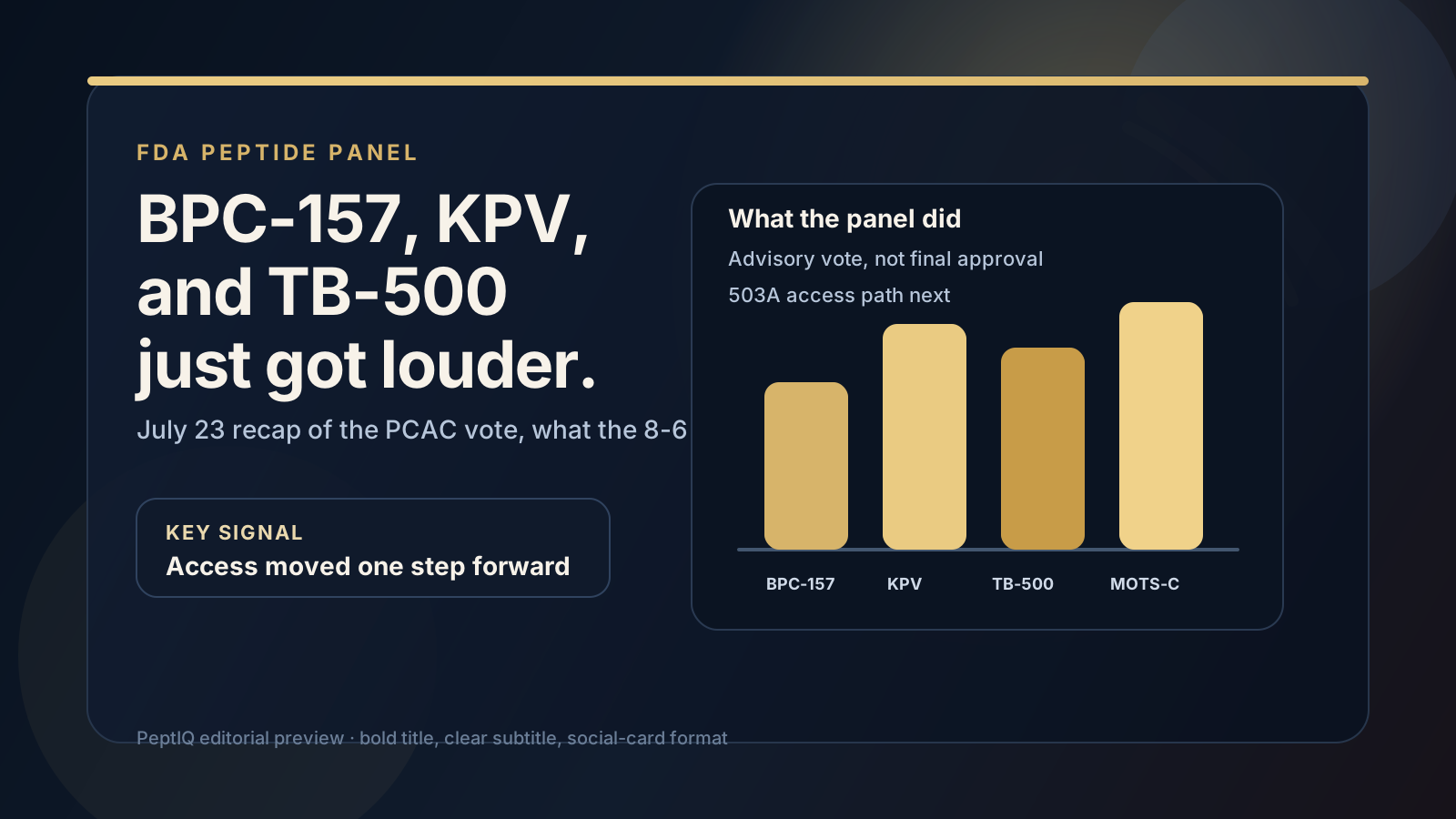
9mThe FDA's peptide panel made its first moves on BPC-157, KPV, and TB-500. The vote matters, but the real story is what it changes next and what still has to happen before compounding pharmacies see any relief.
 8m
8mRegulation does not settle the peptide debate by itself. It forces clearer questions about sourcing, safety, evidence, and who is responsible when claims move faster than data.
 8m
8mThe July 2026 FDA peptide review is important, but it is not an approval event. Here is how to track the meeting, sourcing changes, and protocol decisions without confusing policy movement with clinical proof.
 7m
7mThe biggest peptide trend in 2026 may not be a molecule. It may be oversight, sourcing quality, and the ability to separate evidence from marketing.
 8m
8mThe FDA's April 2026 announcement removed 12 peptides from Category 2 restrictions — the biggest regulatory shift in years. BPC-157, TB-500, MOTS-C, GHK-Cu, and Semax are among those affected. Here's what it actually means for your access.
 8m
8mSeven FDA warning letters in April 2026 show regulators are paying closer attention to online peptide sellers, especially research-use-only marketing that looks like consumer health claims.
 9m
9mAfter years of FDA crackdowns on research peptides, a significant regulatory reversal in 2026 has changed the landscape for BPC-157, TB-500, and MOTS-C. Here's what actually happened and what it means for you.
 8m
8mConfused about peptide compounding categories? This guide breaks down 503a compounding pharmacies, 503b outsourcing facilities, and why “research use only” is not a consumer pathway PeptIQ endorses.
 7m
7mOn April 15, 2026, the FDA announced it will remove injectable GHK-Cu from Category 2 — the list that blocked compounding pharmacies from producing it. This is a major regulatory shift for one of the most studied copper peptides in longevity research.
 9m
9mThe FDA's April 15, 2026 reclassification of 12 research peptides marks the most significant regulatory shift in the space since the 2023 compounding crackdown. Here's a breakdown of the affected compounds, the new compliance landscape, and how to think about your protocol going forward.
 10m
10mAn FDA advisory panel scheduled for July 2026 could reshape access to 12 peptides — including BPC-157, MOTS-C, and GHK-Cu. Here's what's on the table, what reclassification would mean in practice, and how to prepare for either outcome.
 9m
9mAfter years of regulatory limbo, BPC-157 is at the center of a major policy battle. The RFK Jr.-led HHS push to reclassify it as Category 1 could restore legal compounding access—or the FDA could dig in. Here's where things stand.
Also available at /blog for legacy links.