


Loading lessons…
Loading lessons…
Curated lessons across 8 learning paths — from first concepts to trial summaries and practical protocols. Pick your level, follow the curriculum, and build real understanding.
Where are you starting?
Choose a learning path below or search the library. Progress saves in your browser.
Prefer timeline chaos? Peptide X Quiz · Literacy certify
Pick a track — progress rings update as you complete lessons.
62 lessons
 8m
8mSS-31 and MOTS-c dominate mitochondrial peptide search. This list ranks the PeptIQ guides that answer dosage, timing, and stack questions without the forum noise.
 9m
9mSearch keeps landing on the same dosing pages. This listicle points you to the guides people actually use for MOTS-c, KLOW, SS-31, GHK-Cu, IGF-1 LR3, and retatrutide.
 7m
7mMOTS-c now has a favorable advisory recommendation. It still does not have FDA drug approval or an open 503A compounding path.
 7m
7mPCAC recommended BPC-157, KPV, TB-500, MOTS-c, Semax, and Epitalon for 503A compounding. The unresolved fight is what happens while FDA completes rulemaking.
 9m
9mTissue repair is not a side topic anymore. It is one of the clearest signals in peptide research, from wound care to training recovery.
 10m
10mThis week’s signal is less about hype and more about discipline. The compounds matter, but the outcome depends on what you track when appetite, recovery, and tissue repair start to change.
 8m
8mMOTS-c is moving beyond the vague mitochondrial hype cycle. The newest data suggests it may participate in membrane repair, which changes the recovery conversation.
 9m
9mThe newest peptide research batch is less about hype and more about the questions each compound answers. Retatrutide, tesamorelin, BPC-157, GHK-Cu, and MOTS-C all point at different tracking priorities.
 8m
8mThe new peptide conversation is not just about appetite and fat loss. Recovery, tissue quality, and mitochondrial support are becoming the real filters.
 9m
9mThe latest peptide research wave is less about hype and more about what survives real-world tracking. Here is the practical read on retatrutide, BPC-157, MOTS-c, and GHK-Cu.
 9m
9mMOTS-C keeps showing up in 2026 because it points at mitochondrial signaling. The trap is assuming that better signaling automatically means better recovery. It does not.
 7m
7mWeekly amylin agonists are not MOTS-c. Here's when to inject eloralintide for tolerability — dose-day meals, evening vs morning, and what to log.
 8m
8mSS-31 dosage searches keep climbing alongside MOTS-c. Here's the practical elamipretide dosing map — daily mg ranges, timing, cycling, and what to track for mitochondrial protocols.
 9m
9mMOTS-c looks interesting because it can push metabolism in the right direction and still pull repair in the wrong one. The new data are a reminder that pathway activation and tissue healing are not the same thing.
 9m
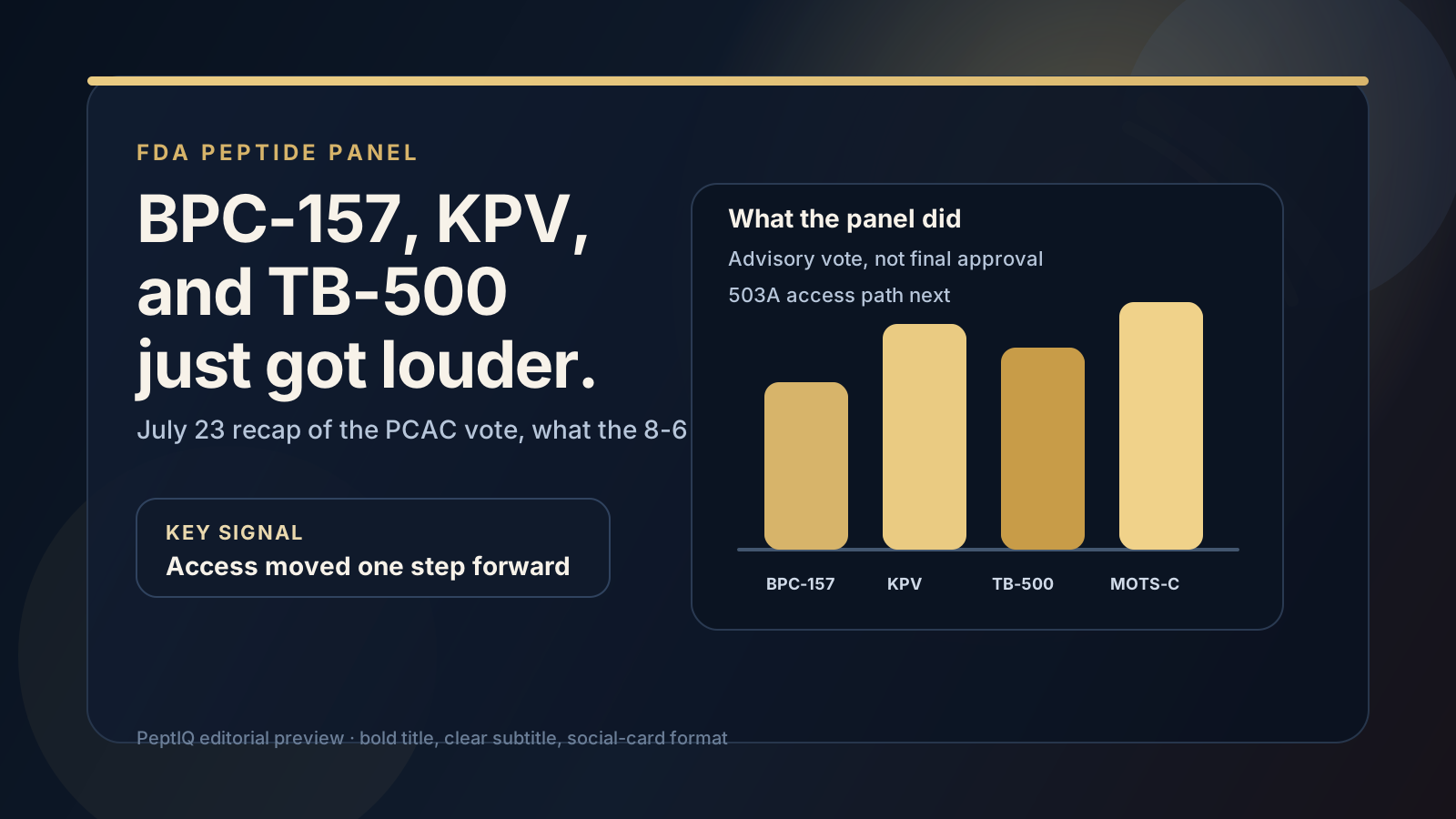
9mThe FDA's peptide panel made its first moves on BPC-157, KPV, and TB-500. The vote matters, but the real story is what it changes next and what still has to happen before compounding pharmacies see any relief.
 9m
9mThe peptide conversation is crowded. The useful question is which signals keep showing up in the data and which ones are still mostly hype.
 9m
9mMOTS-C sits at the intersection of mitochondrial signaling, metabolism, and longevity. July 2026 put it back in the spotlight for a reason.
 8m
8mThe peptide space is loud. This snapshot cuts through the noise and focuses on the compounds that still have real biology behind them.
 8m
8mMOTS-C may help metabolic signaling in human cells, but the same signal could come with a repair cost. That matters for anyone reading the longevity hype.
 10m
10mThe most useful peptide research is not the loudest. It is the stuff that changes the question from 'does it work?' to 'who does it help, for what outcome, and with what tradeoffs?'
 8m
8mRegulation does not settle the peptide debate by itself. It forces clearer questions about sourcing, safety, evidence, and who is responsible when claims move faster than data.
 8m
8mMOTS-c is not just a mitochondrial story. In human cells, the same signal that turns on metabolism may also dampen repair, which makes context matter.
 9m
9mMOTS-C sits at the intersection of mitochondrial signaling, glucose control, and recovery biology. Here is what the current research can actually support.
 8m
8mNew MOTS-C data points to something more specific than a generic metabolism story: better muscle mitochondrial efficiency. Here's what that means in practice.
 8m
8mMOTS-c is showing up in cardiac stress research. A new rat-heart study points toward mitochondrial bioenergetics, mtDNA integrity, and post-ischemic recovery.
 8m
8mMOTS-c is moving beyond generic energy claims. New research points toward mitochondrial stress response, lung inflammation, and cardiac reperfusion biology.
 8m
8mMOTS-c is being studied beyond energy and metabolism. New research points toward tissue-stress biology, lysosomal stability, and cell survival under ischemic pressure.
 8m
8mPeptide research is moving fast. Here is how to read the evidence before turning a headline, mechanism, or social post into a protocol.
 8m
8mMOTS-c is moving beyond the generic energy peptide conversation. New 2026 research connects mitochondrial-derived peptides with atrial fibrosis, inflammation, and heart rhythm biology.
 8m
8mA new MOTS-c pilot study adds a vascular-health signal to the mitochondrial peptide conversation, but it should be read as biomarker research, not a protocol claim.
 8m
8mMOTS-c is one of the most interesting mitochondrial peptides in 2026 because the question is finally shifting from mechanism to human outcomes.
 8m
8mThe July 2026 FDA peptide review is important, but it is not an approval event. Here is how to track the meeting, sourcing changes, and protocol decisions without confusing policy movement with clinical proof.
 7m
7mMOTS-c is a peptide encoded in your mitochondrial DNA that declines with age and mimics exercise benefits in animal studies. NAD+ has actual human clinical data. Here's what 2026 research shows about why these two molecules may work together — and what's still missing.
 7m
7mAMA and FDA updates make one thing clear: peptide interest is moving faster than human evidence, dosing standards, and product-quality controls. Use this checklist before trusting a vial.
 8m
8mStack stories spread fast because they are visual and emotional. The smarter move is not to copy the protocol. It is to ask better evidence questions.
 8m
8mA new sports medicine review puts injury-recovery peptides in context. Some mechanisms are promising, but human evidence, safety data, and regulatory status still matter.
 8m
8mThe FDA's April 2026 announcement removed 12 peptides from Category 2 restrictions — the biggest regulatory shift in years. BPC-157, TB-500, MOTS-C, GHK-Cu, and Semax are among those affected. Here's what it actually means for your access.
 7m
7mMOTS-C has a real adjustment period. Here's why weeks 1-2 can feel rough, when the energy kick in, and how to maximize the transition.
 8m
8mMOTS-C timing affects AMPK activation and metabolic benefits. Learn whether to take it fasted, how long to wait before eating, and how to optimize timing for AM or PM training schedules.
 9m
9mAfter years of FDA crackdowns on research peptides, a significant regulatory reversal in 2026 has changed the landscape for BPC-157, TB-500, and MOTS-C. Here's what actually happened and what it means for you.
 8m
8mFinished your GLP-1 cycle and want to maintain metabolic momentum? MOTS-C is one of the most effective peptides for supporting fat oxidation and energy during GLP-1 off-cycles. Here's how to dose and time it.
 8m
8mThe MOTS-C dosing debate is real: 0.5-1mg daily vs 5mg 2-3x weekly. Both protocols have their advocates. Here's what the research says, why context matters, and how to choose the right approach for your situation.
 9m
9mAlready on Reta and ready to add compounds? Here's how to stack Tesamorelin and MOTS-C with Retatrutide for maximum fat loss and recomp.
 9m
9mRunning Retatrutide and wondering what to add? This guide breaks down how MOTS-C, SS-31, AOD-9604, and SLU-PP-332 layer onto a GLP-1 protocol — and why they're not redundant.
 10m
10m5-Amino-1MQ blocks NNMT instead of suppressing appetite. This guide covers oral dosing ranges and why people stack it with GLP-1s and MOTS-C for stubborn visceral fat.
 9m
9mMOTS-C activates AMPK through mitochondrial signaling. NAD+ feeds the cellular energy substrate. Together, they hit the same system from two different angles — and the results are additive.
 9m
9mThe FDA's April 15, 2026 reclassification of 12 research peptides marks the most significant regulatory shift in the space since the 2023 compounding crackdown. Here's a breakdown of the affected compounds, the new compliance landscape, and how to think about your protocol going forward.
 10m
10mMOTS-C activates AMPK and drives mitochondrial adaptation — but does daily use over months cause your body to stop responding? Here's what the research and user experience actually says about long-term MOTS-C protocols.
 8m
8mMOTS-C is mitochondria-encoded and activates AMPK through a pathway that's less prone to classic receptor downregulation. Here's how to structure long-term use for sustained results.
 10m
10mAn FDA advisory panel scheduled for July 2026 could reshape access to 12 peptides — including BPC-157, MOTS-C, and GHK-Cu. Here's what's on the table, what reclassification would mean in practice, and how to prepare for either outcome.
 10m
10mMost peptide guides are written with a 35-year-old man in mind. If you're a woman in your 40s or 50s lifting hard and trying to recomp, the stack looks different. Here's what the research actually supports.
 7m
7mMOTS-C is one of the most studied mitochondrial peptides for metabolic health and longevity. This guide covers dosing ranges, frequency, timing, stacking options, and what to track on protocol.
 9m
9mMOTS-c — a peptide synthesized inside your own mitochondria — is now in Phase 2a human trials for prediabetes. Early data suggests it improves insulin sensitivity and metabolic flexibility without the side effects of pharmaceutical interventions.
 8m
8mSS-31 and MOTS-C target mitochondrial health from two different angles. Here's how to run them together, when to introduce each, and what to expect.
9mDiscovered inside mitochondrial DNA itself, MOTS-c is one of the most fascinating longevity peptides in modern science. It governs how your cells produce energy, fight fat accumulation, and age.
 6m
6mOne of the most common beginner questions: can you draw multiple peptides into the same syringe? The answer depends on the combination. Here's the complete guide.
 8m
8mNAD+ and peptides like BPC-157, MOTS-C, and KLOW work through completely different pathways — which is exactly why they stack well. Here's how to combine them safely and effectively.
8mBoth MOTS-C and GHK-Cu are popular among serious lifters over 50 — but they work through completely different mechanisms. Here's how to choose, and why the best answer is often both.
10mThe biggest risk with GLP-1 weight loss drugs isn't the fat loss — it's the muscle you lose with it. Strategic peptide stacking can tip the balance toward true body recomposition.
 9m
9mMOTS-C is the first peptide found encoded in mitochondrial DNA. It activates AMPK, mimics exercise-induced metabolic adaptations, and may be one of the most powerful tools for metabolic optimization available.
 14m
14mThe peptide space is shifting from weight loss toward longevity. Explore the science behind peptides designed to slow aging, repair cellular damage, and extend healthspan.
10mMOTS-C activates mitochondrial function and metabolic pathways linked to longevity and improved physical performance.
Also available at /blog for legacy links.