Retatrutide's July 23 Phase 3 Readout Keeps Raising the Ceiling
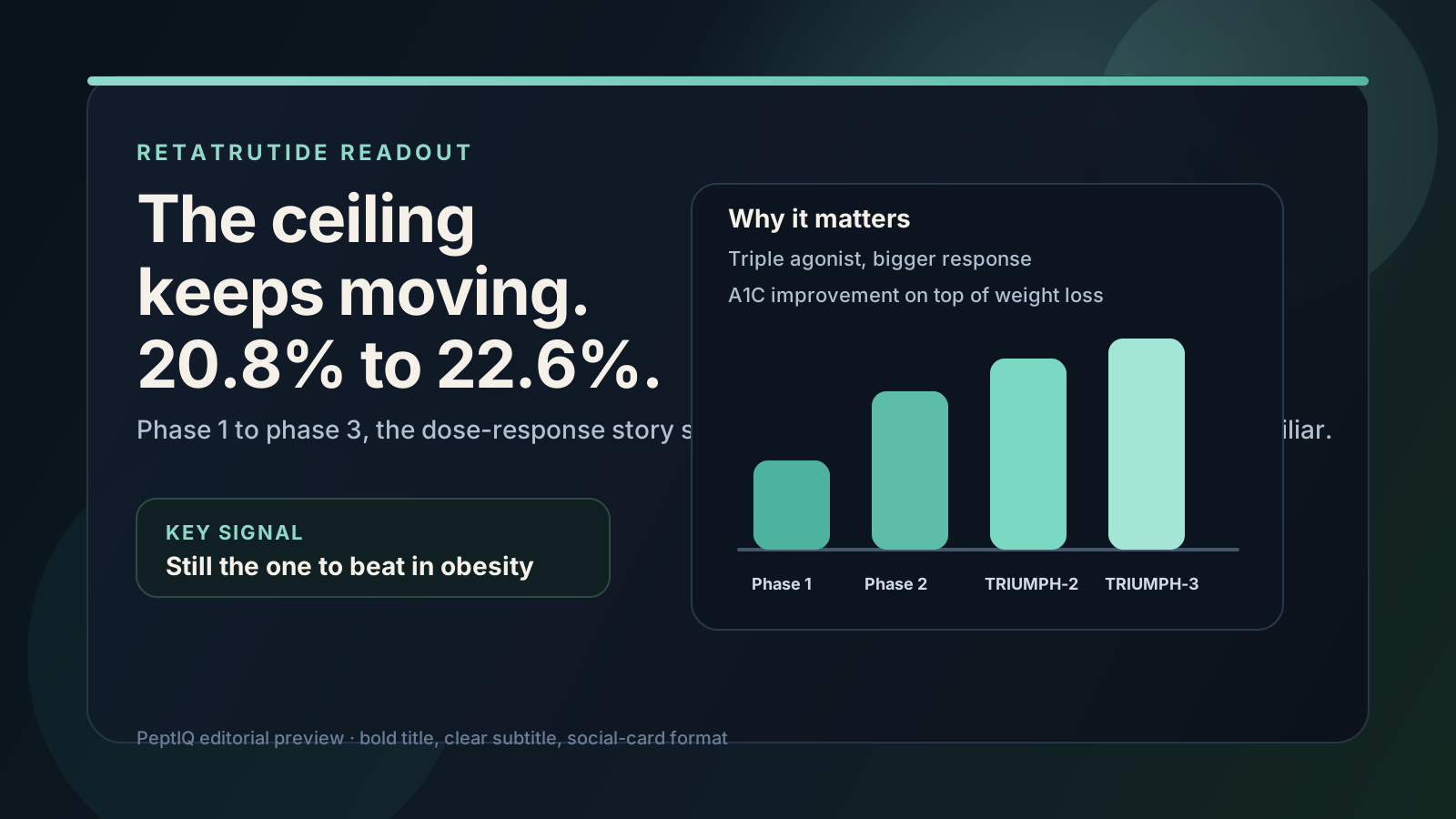
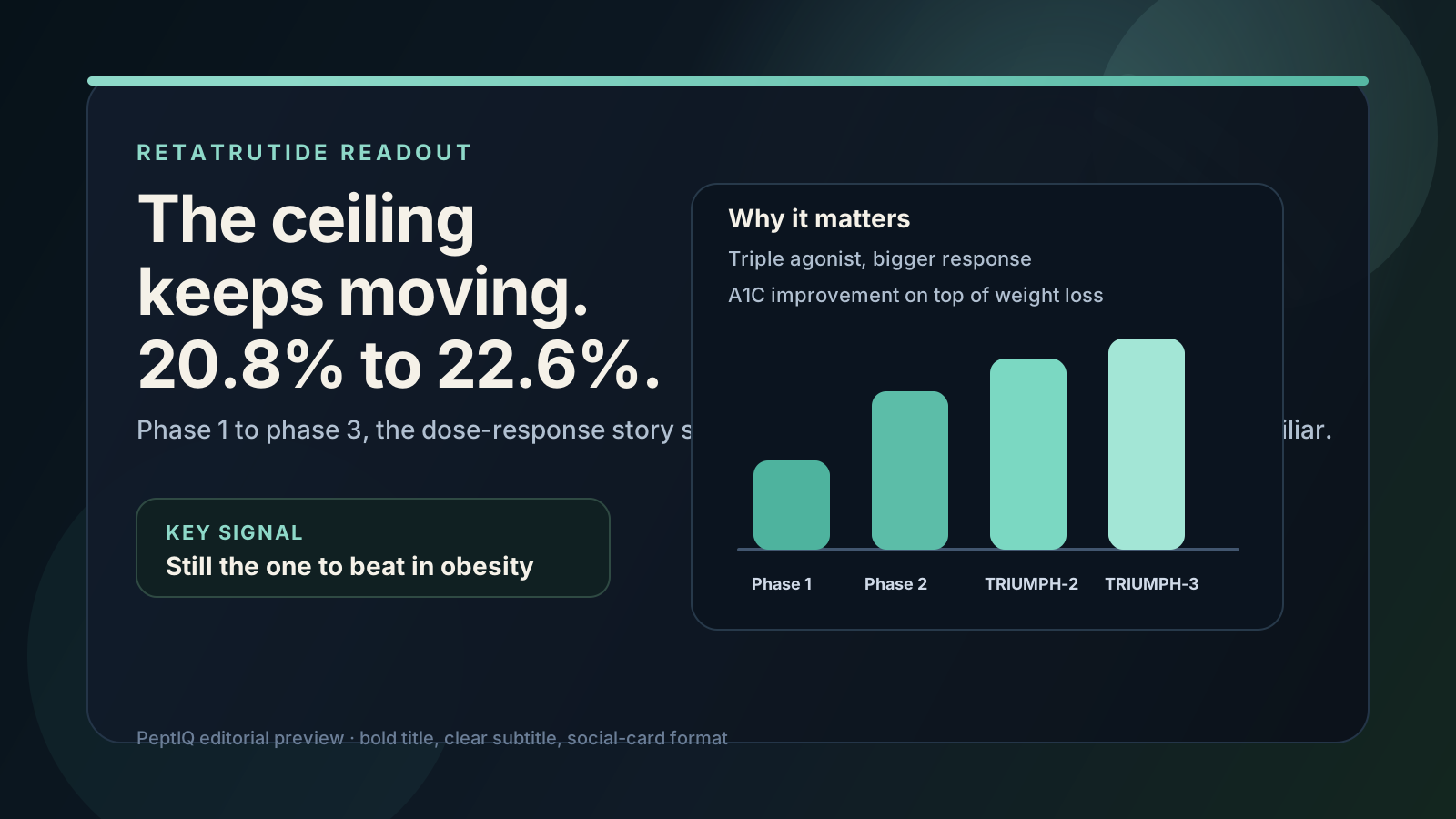
Eli Lilly's July 23, 2026 retatrutide readout delivered 20.8% weight loss in TRIUMPH-2 and 22.6% in TRIUMPH-3. Here is how the new data fits with phase 1 and phase 2.
PeptIQ Team
Peptide Research & Education
Interactive trial story
Story arc
20.8% / 22.6%
Durability
Weekly triple-action story
Phase 1 proved feasibility, phase 2 proved depth, and phase 3 proved the effect still holds when the population gets harder.
Selected phase
Phase 3
TRIUMPH-2 and TRIUMPH-3 both hit primary endpoints in harder populations.
Phase 3 showed the signal holds up when the patient pool gets more complex.
Headline readouts
The chart compares the strongest phase 2 number with the two July 23 phase 3 readouts.
Phase 1
Dose-response and weekly feasibility. It proved the mechanism, not the endpoint.
Phase 2
Deep efficacy and 24.2% at 48 weeks. This is where the market started paying attention.
Phase 3
20.8% and 22.6% in tougher groups. That is the kind of consistency that changes the frame.
Why the chart matters
The July 23 readout now reads like a sequence, not a headline. Phase 1 opened the door, phase 2 proved the depth, and phase 3 confirmed the durability in tougher groups.
PeptIQ app
Track your peptide protocols in PeptIQ
Log injections, vial supply, and reminders. Use peptiq.io calculators when you need math on the web.
Under 25? Talk to a licensed clinician and get baseline labs before starting anything. Why we say this · Labs checklist
# Retatrutide's July 23 Phase 3 Readout Keeps Raising the Ceiling
> Note: PeptIQ is not a medical provider. This article is for educational purposes only. Always work with a qualified clinician before starting, stopping, or changing any treatment.
Eli Lilly's July 23 retatrutide update was not subtle.
TRIUMPH-2 and TRIUMPH-3 both hit their primary endpoints, and the top-line numbers keep retatrutide in a category of its own. The 12 mg arm reached 20.8% average body weight loss in adults with obesity or overweight and type 2 diabetes, and 22.6% in adults with severe obesity and established cardiovascular disease.
Those are not just strong numbers. They are the kind of numbers that shift the frame of the conversation.
> Phase 1 proved feasibility. Phase 2 proved depth. Phase 3 proved the effect holds up when the population gets harder.
Use the phase switcher above to move through the story in order: feasibility, depth, then durability.
The New Phase 3 Numbers
Here is the new July 23 data in plain language:
TRIUMPH-2: 20.8% average weight loss at 80 weeks with 12 mg, plus A1C reductions up to 1.6 percentage points
TRIUMPH-3: 22.6% average weight loss at 80 weeks with 12 mg
The most common adverse events were gastrointestinal and generally mild to moderate
Lilly plans to submit its BLA to the FDA in Q1 2027
The TRIUMPH-2 population had obesity or overweight plus type 2 diabetes, which makes the weight-loss result especially relevant because it came in a harder-to-treat metabolic group.
The TRIUMPH-3 population had severe obesity and established cardiovascular disease, so that readout matters because it speaks to a higher-risk cardiometabolic cohort.
The Story Arc In One Line
Retatrutide moved from interesting to undeniable by doing the same thing across each phase, just at larger scale and in harder patients.
That is why this molecule keeps getting attention. It keeps clearing the next bar.
The Timeline That Matters
Stage
What it answered
Why it mattered
Phase 1
Does the drug behave like a weekly human therapy?
It established feasibility and dose response.
Phase 2
Does the effect remain deep over time?
It showed 24.2% at 48 weeks at the top dose.
Phase 3
Does the result hold in tougher populations?
It delivered 20.8% and 22.6% in large pivotal trials.
How The Story Started In Phase 1
Retatrutide did not become interesting in phase 3. Phase 3 just confirmed what phase 1 hinted at.
The first-in-human work used a multiple ascending dose design over 12 weeks. The study tested once-weekly subcutaneous doses from 0.5 mg up to 12 mg and showed a clear dose-response signal.
That early data mattered for two reasons:
It showed retatrutide was biologically active in humans
It showed the effect was dose-dependent, not random noise
The phase 1 readout was not about giant headline weight-loss numbers. It was about proving the mechanism was doing what Lilly expected, while staying within a tolerability range that made weekly dosing plausible.
That is the boring part that makes later success possible.
What Phase 2 Added
Phase 2 turned the signal into a shape.
Lilly's NEJM-published phase 2 study showed:
17.5% mean weight reduction at 24 weeks with the highest dose
24.2% mean weight reduction at 48 weeks with the highest dose
Dose-dependent improvement in glycemic markers
GI side effects that were common but usually manageable
That was the moment the molecule stopped looking like a clever concept and started looking like a serious obesity drug candidate.
The phase 2 numbers also made the later phase 3 results easier to interpret. Retatrutide was not just producing a short-lived appetite effect. It was sustaining a deep response over time.
Why Retatrutide Keeps Winning The Comparison
Retatrutide is a triple agonist. It hits:
GIP
GLP-1
glucagon
That third receptor is the reason people keep comparing it to tirzepatide and semaglutide and then running out of comparison room.
The glucagon component appears to drive more energy expenditure and fat mobilization than a standard GLP-1-only approach. That is the mechanistic reason the molecule keeps pushing past older benchmarks.
The data now line up in a clean story:
Phase 1 established dose response and feasibility
Phase 2 showed high-magnitude weight loss over 48 weeks
Phase 3 showed the effect can hold up in harder-to-treat groups
That sequence is what makes retatrutide more than just a flashy trial result.
What The Safety Profile Still Says
The tradeoff has not changed much.
Retatrutide still looks like a strong efficacy story with a familiar GLP-1 class tolerability profile:
nausea
diarrhea
constipation
vomiting
dose escalation friction
That matters because the strongest drugs in obesity medicine usually ask the user to earn the result through titration discipline.
The July 23 readout did not erase that reality.
It just showed the payoff can be substantial when people stay on protocol long enough.
A Simple Way To Read The Data
If you want the shortest honest summary, use this:
Phase 1: the molecule worked in humans
Phase 2: the molecule looked better than expected
Phase 3: the molecule still looks exceptional in larger, harder populations
That does not mean everyone should chase it.
It does mean the retatrutide story is no longer speculative. The question has shifted from "does it work?" to "how do we use it safely, who benefits most, and how much tolerability the market will accept?"
What It Means For The Peptide Community
Retatrutide is now the clearest example of where peptide medicine is heading:
more receptor complexity
more metabolic effect
more attention on long-term adherence
more need for protein intake, resistance training, and symptom tracking
If you are tracking a metabolic protocol, body weight alone is too crude.
You want to know:
how your appetite changed
whether your training performance held up
whether GI symptoms are settling
whether your A1C, waist, or fasting glucose moved
That is the kind of data that tells you whether a compound is helping or just making the scale look good for a while.
Frequently Asked Questions
Q: Is retatrutide FDA approved now?
A: No. Lilly said it plans to submit a BLA to the FDA in Q1 2027.
Q: How does the new phase 3 data compare with phase 2?
A: Phase 2 reached 24.2% at 48 weeks at the top dose. The new phase 3 readout showed 20.8% in TRIUMPH-2 and 22.6% in TRIUMPH-3 at 80 weeks.
Q: What did phase 1 show?
A: A dose-dependent human signal in a multiple ascending dose study, which helped establish feasibility and tolerability for the weekly dosing model.
Q: Why does retatrutide get so much attention?
A: Because it combines GIP, GLP-1, and glucagon agonism in one molecule and keeps producing unusually deep weight-loss results.
Q: What should I track if I am following a retatrutide-style protocol?
A: Weight, waist, appetite, GI side effects, energy, protein intake, and training performance.
Bottom Line
Retatrutide keeps doing the thing people hoped it would do, but at a scale that keeps surprising the market.
Phase 1 showed the drug was real.
Phase 2 showed the effect could be deep.
Phase 3 showed the effect can still hold up across tougher populations.
The next chapter is no longer about hype. It is about submission, review, access, and whether people can stay on the protocol long enough to capture the result.