


Loading lessons…
Loading lessons…
Curated lessons across 8 learning paths — from first concepts to trial summaries and practical protocols. Pick your level, follow the curriculum, and build real understanding.
Where are you starting?
Choose a learning path below or search the library. Progress saves in your browser.
Prefer timeline chaos? Peptide X Quiz · Literacy certify
Pick a track — progress rings update as you complete lessons.
51 lessons
 12m
12mThe only peptides with large controlled trials for weight loss are the GLP-1 class: semaglutide, tirzepatide, and the oral options approved in 2025 and 2026. Retatrutide is next but still investigational. Here's how they work, what the trials showed, and how to access them through a licensed clinician.
7mTwo of Lilly's next obesity drugs work in completely different ways. Here's how eloralintide (amylin) and retatrutide (triple agonist) compare on the published data.
 8m
8mThe loudest peptide stories are moving at different speeds. PCAC recommendations await FDA action, oral GLP-1 access is real, and the next obesity programs still have filing or review milestones ahead.
 9m
9mPeople do not stay on GLP-1 plans because they are disciplined forever. They stay on them when the plan feels manageable, repeatable, and clear enough to trust on a busy week.
 10m
10mRetatrutide may dominate the weight-loss discussion, but the market debate is really about quality control, documentation, and whether a plan can survive real life.
 10m
10mRetatrutide is moving from conference noise into real-world access. That shift changes the conversation from headline weight loss to who gets treated, what gets monitored, and how body composition holds up.
 8m
8mRetatrutide is still the loudest metabolic signal in the room. The people who get the best result are the ones who track body composition, not just pounds lost.
 8m
8mAmycretin puts GLP-1 and amylin in one molecule — with both a pill and a weekly shot in development. Here's the beginner map before Phase 3 ladders finalize.
 9m
9mAmycretin is Novo's dual GLP-1 + amylin molecule with both oral and injectable programs. Here's the early dosing map and why Phase 3 is the next SEO wave.
 8m
8mSame company family of ideas — GLP-1 + amylin — two product architectures. Here's how amycretin compares to CagriSema without fake head-to-head rankings.
 8m
8mCagrilintide is the amylin half of CagriSema. Here's the dosing map people actually search — 2.4 mg weekly combo context, monotherapy signal, and how not to cross-titrate with eloralintide.
 8m
8mCT-388 is Roche's weekly tirzepatide-class dual agonist with Phase 2 doses up to 24 mg. Here's the dosing vocabulary and the weight-loss signal searchers want.
 9m
9mEloralintide is Lilly's once-weekly selective amylin receptor agonist. If you follow GLP-1s, CagriSema, or retatrutide, this is the next pathway to understand — satiety biology, trial doses, and what the early data actually show.
 8m
8mSearching for eloralintide dosage? Here is the clean map of Phase 2 once-weekly doses, titration arms, and weight-loss results — framed as clinical education, not a DIY protocol.
 8m
8mAmylin + incretin is the stacking thesis behind CagriSema — and now eloralintide. Here's the clinical logic for combining pathways, without turning investigational drugs into DIY stacks.
 7m
7mAmylin agonists can feel GLP-1-like in the gut. Here's how to think about eloralintide tolerability, escalation, and symptom tracking without turning trial data into fear content.
 8m
8mBoth hit amylin biology. One is Lilly's Phase 3 monotherapy / combo candidate. The other is the amylin half of CagriSema. Here's a clear comparison for people following the next wave of obesity peptides.
 8m
8mTwo weekly amylin programs, two sponsors, two data shapes. Here's a clear eloralintide vs petrelintide comparison for people following the next obesity wave.
 8m
8mPhase 2 put eloralintide on the board with roughly 9–20% mean weight loss at 48 weeks. Here's the results breakdown — and the troubleshooting mindset for plateaus on any amylin or GLP-1 protocol.
 6m
6mMacupatide is the Lilly code name beside eloralintide that most people skip. This beginner guide explains what it is — and what not to invent about dosing yet.
 7m
7mEloralintide is only half the Lilly amylin headline. Macupatide shows up in the same ClinicalTrials.gov cluster. Here's the combo literacy guide.
 8m
8mMariTide is Amgen's once-monthly obesity candidate. This beginner guide covers the mechanism framing, Phase 2 headlines, and what serious trackers should log.
 9m
9mMariTide is the once-monthly obesity candidate people keep comparing to weekly GLP-1s. Here's the Phase 2 dosing map — 140 / 280 / 420 mg and the escalation arms that mattered for tolerability.
 7m
7mMonthly conjugates can pack a bigger post-dose GI window. Here's how to think about MariTide tolerability using Phase 2 lessons — without fear content.
 8m
8mWeekly vs monthly is the real MariTide comparison. Here's how Amgen's conjugate stacks up conceptually against weekly dual/triple agonists — without fake head-to-heads.
 7m
7mMazdutide is a once-weekly glucagon/GLP-1 dual agonist with clear Phase 3 dose anchors at 4 mg and 6 mg. Here's the dosing and results map searchers want.
 8m
8mOrforglipron is Lilly's once-daily oral small-molecule GLP-1. Here's the titration ladder searchers want — 1 mg start, step-ups every four weeks, and Phase 3 maintenance doses.
 7m
7mPetrelintide is the amylin analog drawing attention for tolerability. This beginner guide covers what it is, what ZUPREME-1 showed, and what to watch next.
 8m
8mPetrelintide is the Roche/Zealand once-weekly amylin analog drawing GLP-1-level attention for tolerability. Here's the Phase 2 dosing pattern, results, and what to track.
 8m
8mSurvodutide is Boehringer's glucagon/GLP-1 dual agonist. Here's the dosing map from dose-finding through Phase 3 — weekly mg ranges, escalation logic, and what the weight-loss data showed.
 9m
9mMOTS-c looks interesting because it can push metabolism in the right direction and still pull repair in the wrong one. The new data are a reminder that pathway activation and tissue healing are not the same thing.
 9m
9mRetatrutide changes the appetite game fast. The people who get the best result are the ones who keep protein, training, and waist measurements in view at the same time.
 9m
9mRetatrutide is forcing a better conversation about fat loss. The scale matters, but body composition, protein, and strength tell you whether the result will hold.
 9m
9mRetatrutide keeps stacking strong data, and the latest trial update sharpens the path toward an FDA submission. The bigger story is not just weight loss. It is how the triple-agonist profile may change what obesity medicine expects from a next-wave therapy.
 9m
9mRetatrutide can change weight fast enough to dominate the headline, but the better question is whether the loss is moving the right tissues, the right labs, and the right habits. That is where waist circumference becomes more useful than the scale.
 10m
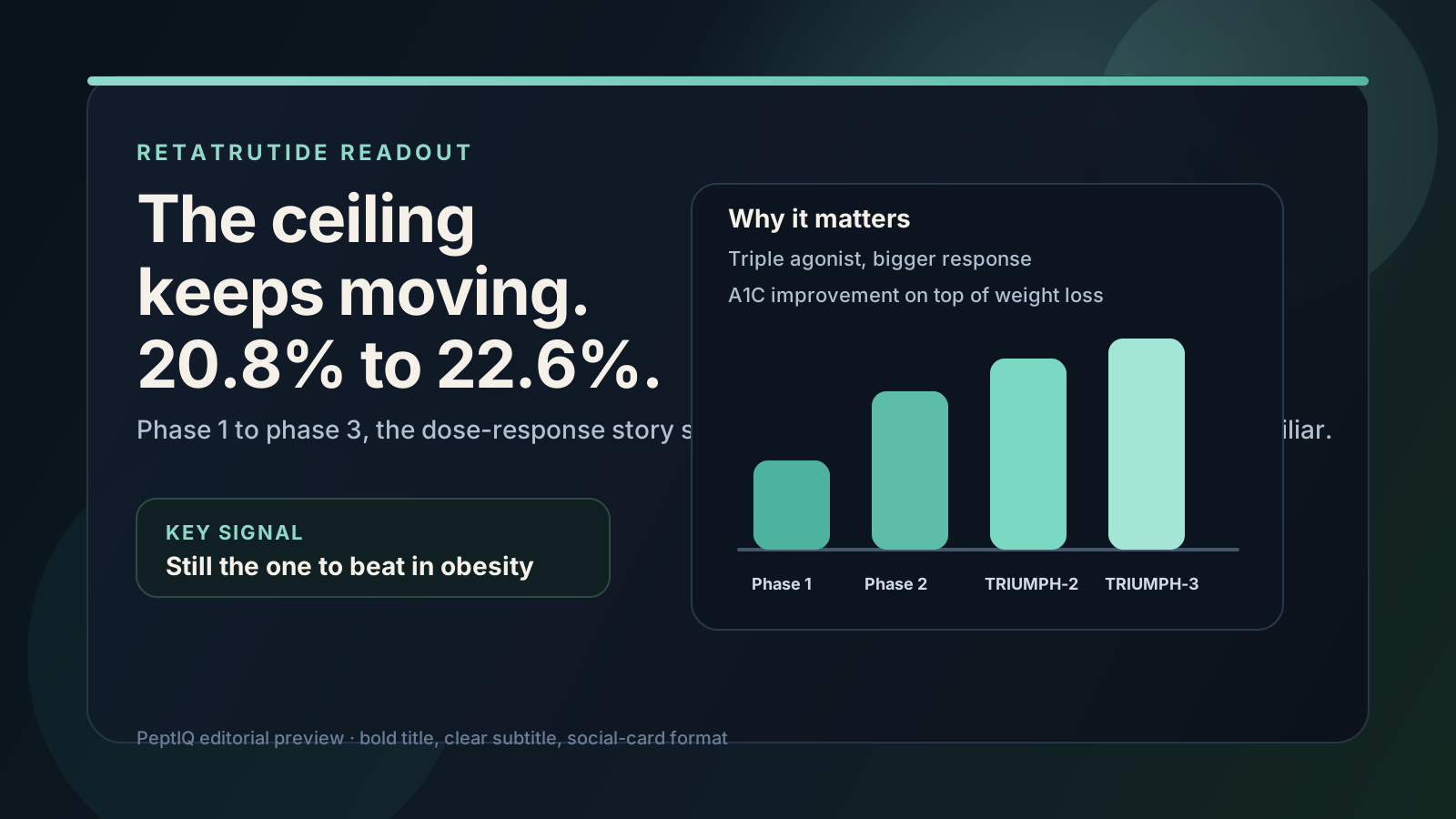
10mRetatrutide just posted two more strong phase 3 wins. The new numbers matter, but the bigger story is how phase 1, phase 2, and phase 3 now line up into one very clear dose-response story.
 9m
9mGLP-1 weight loss is not the same as automatic muscle loss. The real story depends on protein, resistance training, and tracking.
 8m
8mScale weight is noisy. If you are using retatrutide, waist trend, body composition, protein intake, and strength matter more than a single weigh-in.
 9m
9mClinical trials show the headline results. Real-world data shows what happens after the first prescription, after the side effects, and after people try to stay on therapy long enough to benefit.
 9m
9mRetatrutide's weight-loss signal is now strong enough that people are comparing it with surgery. That comparison is useful, but only if you understand what the numbers do and do not mean.
 9m
9mRetatrutide is no longer just a weight-loss story. The latest kidney-aware review sharpens the question: which metabolic patients need tighter monitoring, slower escalation, and better data?
 8m
8mGLP-1 research is moving beyond weight loss. New breast cancer risk and survival signals are interesting, but they need careful interpretation.
 8m
8mThe next metabolic peptide wave is not just stronger GLP-1 dosing. Amylin, GIP, glucagon, and combination protocols are changing what serious tracking should include.
 8m
8mGLP-1 research is moving beyond weight loss. Recent ophthalmology studies suggest possible links with age-related macular degeneration, but the signals are mixed and need careful interpretation.
 7m
7mDapiglutide is not another simple GLP-1 copycat. The early 2026 trial missed statistical significance for weight loss, but the mechanism points toward the next phase of peptide design.
 9m
9mThe TRIUMPH-4 trial delivers groundbreaking dual benefits: 28.7% body weight reduction plus significant osteoarthritis pain relief. Retatrutide's triple mechanism may solve two problems simultaneously.
 7m
7m31% body weight loss in a trial participant. Not an average — an individual result. But when 39.4% of Phase 3 participants on the 12mg dose hit the same milestone, the outlier becomes a pattern.
 9m
9mNew Phase 3 data shows Retatrutide nearly doubled the weight loss results of current GLP-1 drugs without hitting a plateau.
 9m
9mYou don't need to have diabetes to benefit from GLP-1 therapy. A comprehensive 2026 systematic review confirms what the peptide community has known for years — and the results are striking.
 9m
9mEveryone focused on the 71-pound weight loss stat from TRIUMPH-4. But the buried finding — 75.8% reduction in knee pain scores — may be the more important number for anyone living with joint pain.
 9m
9mRetatrutide is showing remarkable 2-year durability for weight loss. Here's what the science says and what it means for your protocol.
Also available at /blog for legacy links.