The peptide landscape in 2026 looks nothing like it did five years ago. What started as a niche corner of biohacking has exploded into mainstream longevity medicine, high-performance athletics, and even dermatology. New compounds are emerging, old favorites are being vindicated by human trials, and a handful of overhyped peptides are finally getting called out.
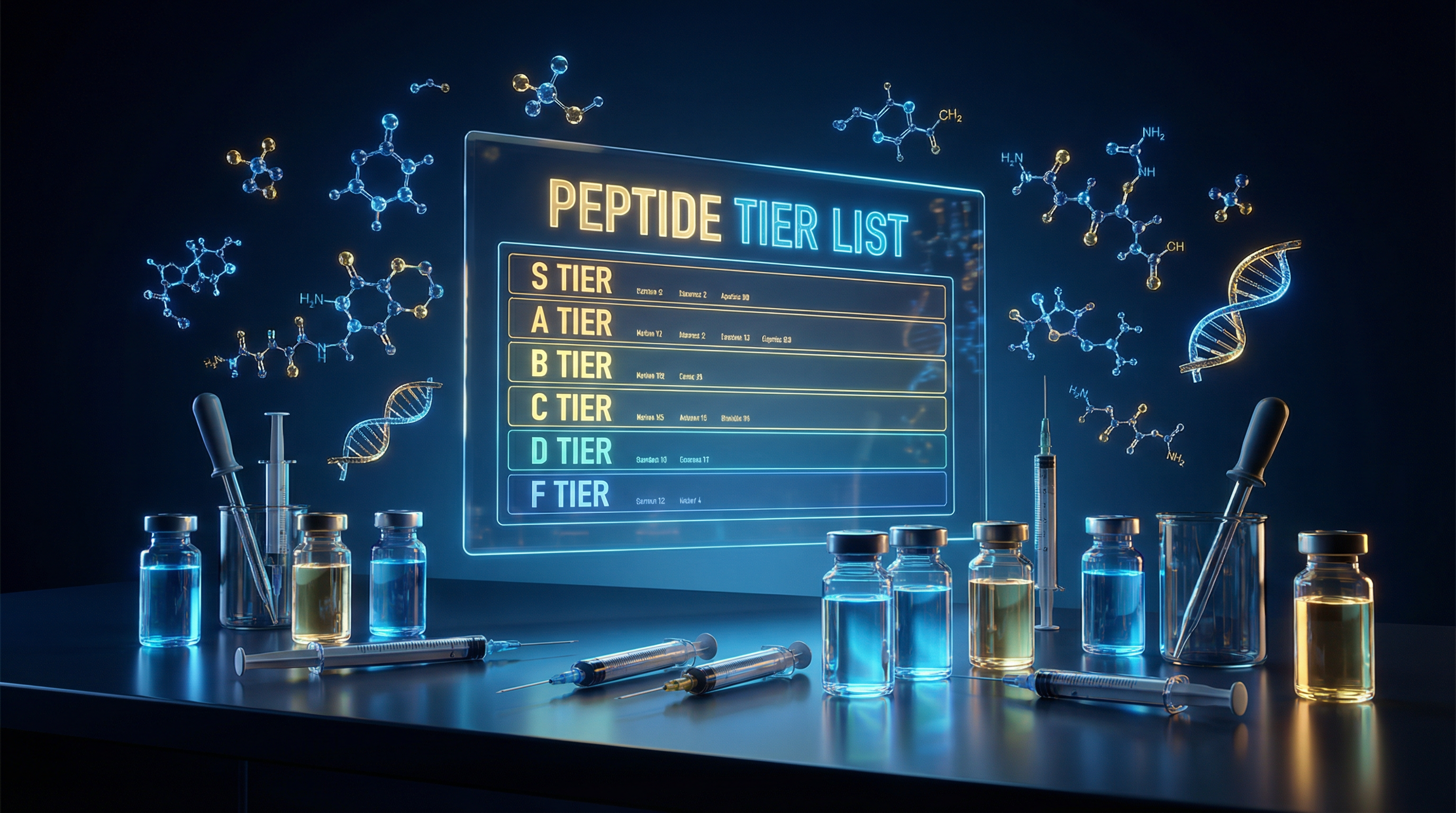
This is the definitive 2026 peptide tier list — ranking over 20 compounds across fat loss, skincare, longevity, tissue healing, and cognitive performance. We're using the classic gaming tier system: S is elite (use immediately), A is excellent, B is solid with caveats, C is situational, D is disappointing, and F is avoid.
Let's get into it.
---
---
How We Rank Peptides
Before we dive in, here's our scoring framework:
- Evidence base — Peer-reviewed research, human trials, and mechanistic data
- Real-world results — Practitioner reports and biohacker community data
- Safety profile — Side effect frequency and severity
- Accessibility — Availability, stability, and ease of use
- Value-to-cost ratio — Results delivered relative to expense and effort
A peptide doesn't need to check every box to earn a high tier — a narrow-but-exceptional benefit can still warrant A or even S tier. The question is: does it do what it promises?
---
S Tier — The Absolute Elite
These are the compounds that are genuinely transforming outcomes in 2026. If there's a peptide hierarchy, these sit at the very top.
BPC-157 — The Universal Healer
Category: Healing, gut health, joint repair, neuroprotection
BPC-157 (Body Protection Compound 157) remains the undisputed king of healing peptides. Derived from a gastric protection protein in human gastric juice, this 15-amino-acid sequence has accumulated one of the most impressive mechanistic profiles in peptide science.
What makes BPC-157 genuinely S-tier in 2026 is breadth. This compound doesn't specialize — it generalizes at a spectacular level:
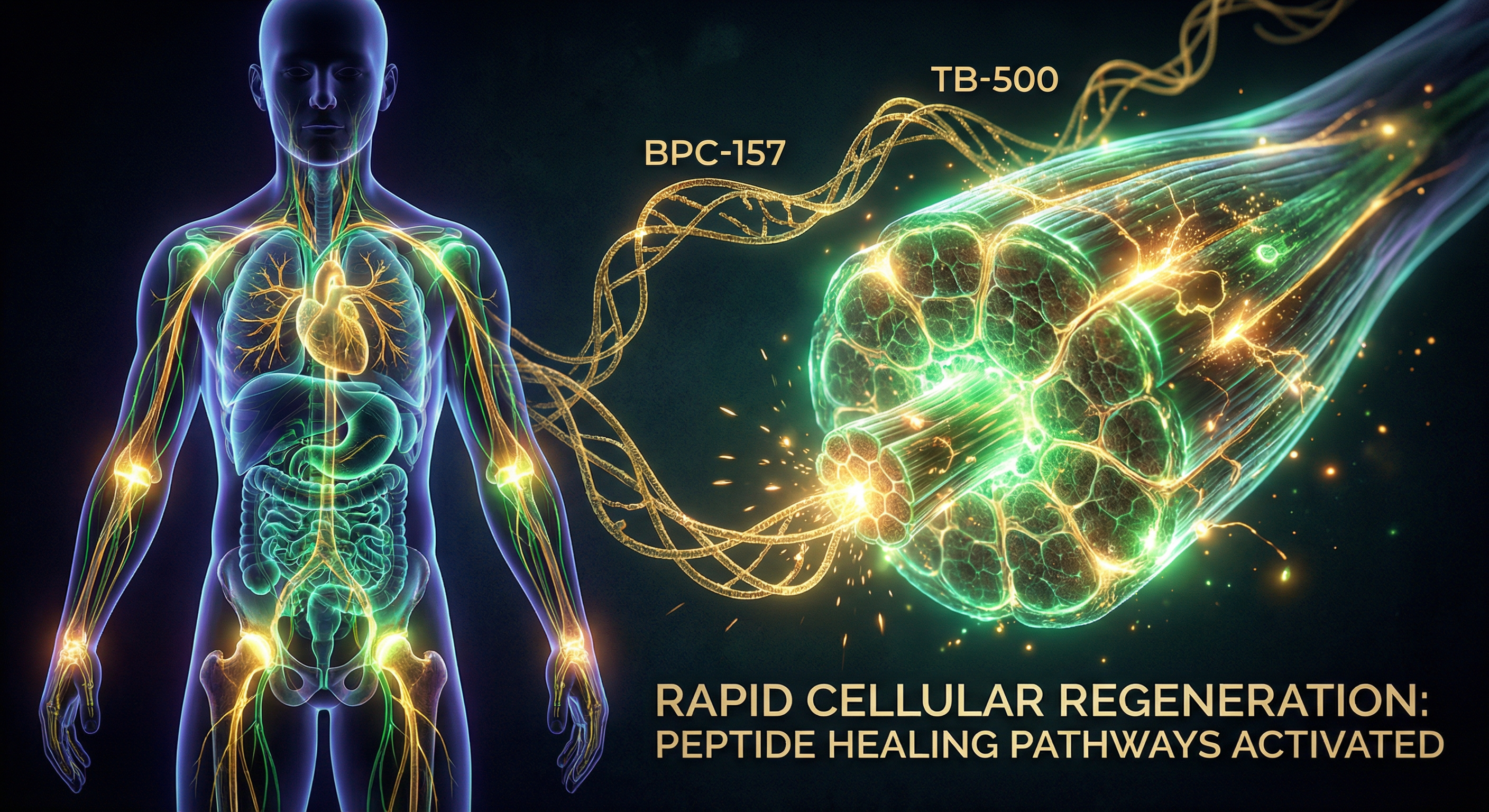
- Tendon and ligament repair: Multiple rodent studies show accelerated healing at rates that should be impossible. Torn tendons, torn ACLs, muscle injuries — BPC-157 accelerates all of them via upregulation of growth hormone receptors and VEGF (vascular endothelial growth factor).
- Gut healing: For anyone dealing with IBD, SIBO, leaky gut, or damage from NSAIDs and alcohol, BPC-157 is unlike anything else available. Oral administration works (rare for peptides), and it directly repairs the intestinal epithelium.
- Neuroprotection: Emerging 2024–2025 data shows BPC-157 crossing the blood-brain barrier and modulating dopamine and serotonin systems, showing promise for traumatic brain injury and even Parkinson's models.
- Cardiovascular: Protects against NSAID-induced damage, promotes angiogenesis in ischemic tissue.
Dosing: 250–500 mcg daily, subcutaneous or oral (for gut specifically)
Safety: Exceptional. No serious adverse events in decades of animal data. No known abuse potential.
Tirzepatide — The Fat Loss Revolution
Category: Fat loss, metabolic health, type 2 diabetes
If you've paid any attention to health media over the past two years, you already know tirzepatide changed everything. As a dual GIP/GLP-1 receptor agonist, it achieves fat loss numbers that were previously only seen post-bariatric surgery: 20–22% body weight reduction in clinical trials.
What makes tirzepatide S-tier over semaglutide (which is a strong A) is the GIP receptor engagement. The dual mechanism doesn't just suppress appetite harder — it fundamentally changes energy partitioning, increases insulin sensitivity independently of weight loss, and appears to have better tolerability for many users than pure GLP-1 agonists.
2026 data continues to impress: tirzepatide is now showing benefits for sleep apnea, fatty liver disease (MASH), heart failure with preserved ejection fraction, and early data in PCOS management is very strong.
Dosing: 2.5 mg weekly, titrating up to 15 mg
Caveats: Requires prescription, risk of muscle loss without resistance training, GI side effects during titration
Verdict: If you need metabolic intervention, this is the gold standard.
GHK-Cu — Copper Peptide Skin Revolution
Category: Skincare, wound healing, hair growth
GHK-Cu (glycyl-L-histidyl-L-lysine copper) has been studied since the 1970s but only recently gained the recognition it deserves as one of the most comprehensively studied cosmeceutical peptides in existence. In 2026, it sits comfortably in S tier for skin and is climbing fast in systemic applications.
The mechanism is extraordinary: GHK-Cu is a natural tripeptide that declines sharply with age. At 20, plasma GHK-Cu levels are robust. By 60, they've fallen precipitously — and that decline correlates with exactly the kind of cellular deterioration we associate with aging.
What the research shows:
- Upregulates over 70 genes involved in collagen synthesis and skin remodeling
- Downregulates genes associated with inflammation and fibrosis
- Promotes stem cell activation in hair follicles (clinically comparable to minoxidil in some data)
- Accelerates wound healing by triggering a comprehensive regenerative cascade
- Anti-inflammatory at the gene expression level — not just surface suppression
Topical vs. injectable: Injectable GHK-Cu delivers systemic benefits beyond what topicals can reach, though high-quality topical formulations (>1%) have impressive skin-specific results.
Epithalon — The Telomere Peptide
Category: Longevity, anti-aging, circadian rhythm, cancer protection
Epithalon is the compound that gives serious longevity researchers goosebumps. This tetrapeptide (Ala-Glu-Asp-Gly) was developed by the St. Petersburg Institute of Bioregulation and Gerontology, and the human trial data — spanning decades of research by Vladimir Khavinson — is remarkable:
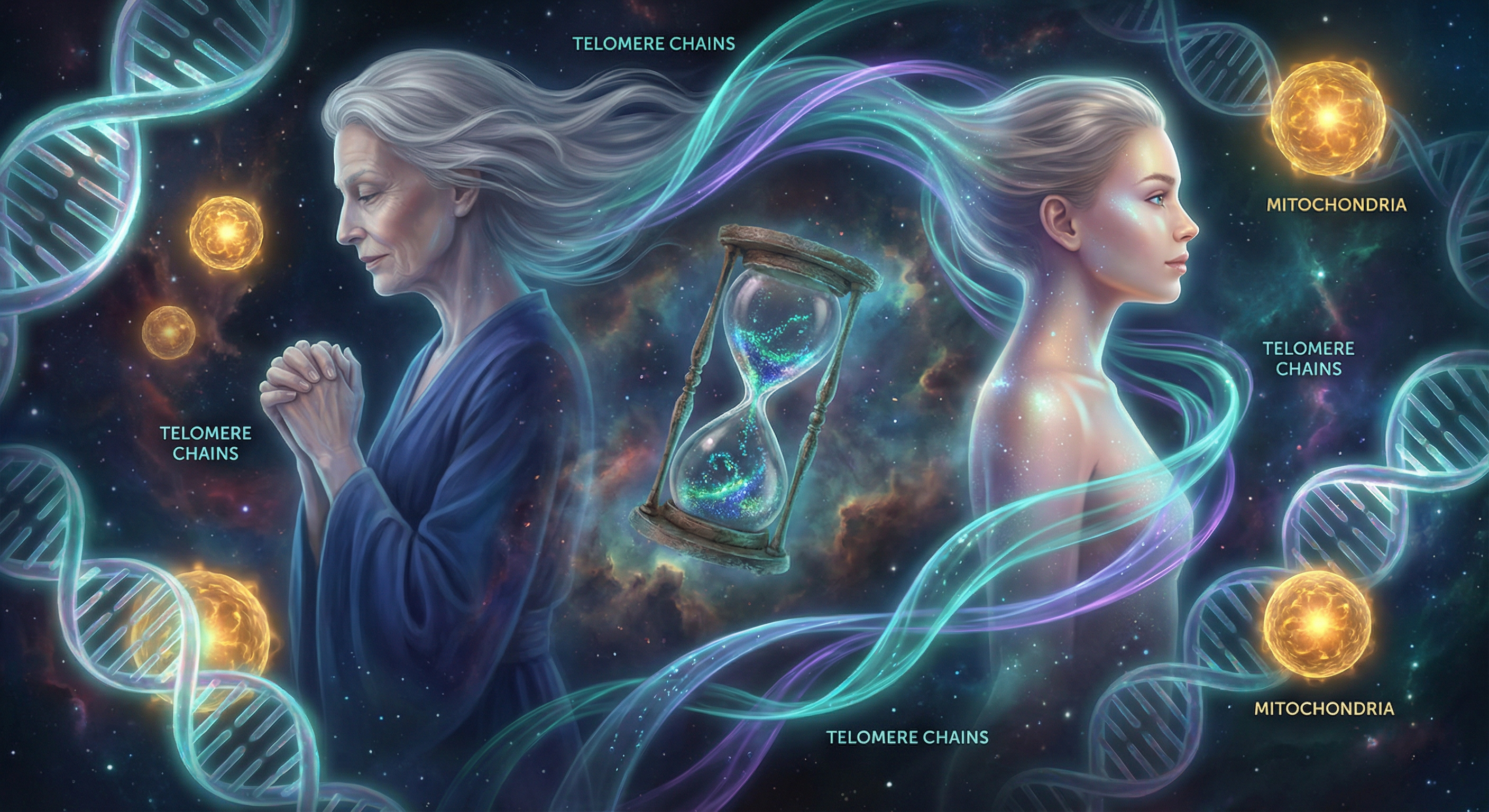
- Telomere lengthening: Epithalon is the only compound with credible human data showing actual telomere elongation via telomerase activation in somatic cells. Telomere length is one of the most robust biomarkers of biological aging.
- Melatonin restoration: Restores age-related decline in pineal gland melatonin secretion — not by supplementing melatonin, but by restoring the pineal gland's own production capacity.
- Cancer protection: Multiple studies show Epithalon extends maximum lifespan and reduces cancer incidence in rodent studies. The human data, while limited, is directionally consistent.
- Circadian normalization: Profoundly improves sleep quality, particularly in older individuals.
Dosing: 5–10 mg daily for 10–20 days, 1–2 cycles per year
Status: The longevity peptide with the best evidence profile in 2026. Nothing else comes close for pure anti-aging intent.
---
A Tier — Excellent Performers
Strong, well-evidenced compounds with excellent safety profiles. Most people would do well here.
TB-500 (Thymosin Beta-4)
Category: Tissue healing, inflammation, recovery
TB-500 is BPC-157's closest rival and frequent stacking partner. Where BPC-157 excels at structural repair and gut healing, TB-500 specializes in acute inflammation resolution and systemic tissue regeneration.
The mechanism centers on actin binding: TB-500 sequesters actin monomers, which modulates cell migration, reduces inflammation, and promotes blood vessel formation in injured tissue. It's particularly powerful for:
- Cardiac muscle healing (most studied in heart attack models)
- Muscle fiber regeneration after acute injury
- Reducing scar tissue formation
- Neurological recovery
Why A and not S: TB-500 is more specialized than BPC-157. It's exceptional at what it does, but the breadth of benefit is narrower.
Dosing: 2–4 mg twice weekly for 4–6 weeks, then monthly maintenance
Ipamorelin + CJC-1295 (No-DAC)
Category: Growth hormone optimization, body composition, recovery, sleep
This stack remains the gold standard for growth hormone secretagogue therapy in 2026. The combination works because they target complementary mechanisms: Ipamorelin is a selective GHRP (ghrelin receptor agonist) that triggers GH pulses without stimulating cortisol or prolactin, while CJC-1295 (no DAC version) extends the GH pulse duration.
The result is a more natural, pulsatile GH release pattern that:
- Improves sleep quality and deep sleep architecture significantly
- Enhances fat loss, particularly around the midsection
- Speeds muscle recovery and repair
- Improves skin texture over time
Why A and not S: Effects are real but modest compared to exogenous GH. Best understood as optimization rather than transformation.
Dosing: 200–300 mcg of each, subcutaneous, 30–60 minutes before sleep on an empty stomach
Semaglutide
Category: Fat loss, metabolic health
Semaglutide (the GLP-1 component of the now S-tier tirzepatide) earns A tier on its own. The 15–17% body weight reduction seen in STEP trials is genuine and reproducible. It's now off-patent in several markets, dramatically improving access and reducing cost.
A and not S because: Tirzepatide simply outperforms it on every clinically meaningful metric when both are available. Semaglutide is excellent; tirzepatide is exceptional.
SS-31 (Elamipretide)
Category: Mitochondrial function, longevity, heart failure, exercise performance
SS-31 is the dark horse of 2026. This mitochondria-targeted peptide binds to cardiolipin in the inner mitochondrial membrane and prevents electron leak, reducing reactive oxygen species production at the source.
The clinical implications are staggering: improved mitochondrial function is downstream of nearly every aging-related pathology. Early human data in heart failure and frailty is very promising, and the exercise performance data in older populations is striking.
Dosing: 10–40 mg subcutaneous daily
Status: Access is improving but still limited. Watch this space — SS-31 may be S-tier by 2027.
---
B Tier — Solid with Caveats
Real benefits, but with meaningful limitations or narrower applications.
PT-141 (Bremelanotide)
Category: Sexual health and libido (both sexes)
PT-141 is FDA-approved for hypoactive sexual desire disorder in premenopausal women, and it works through a genuinely novel mechanism — acting centrally on melanocortin receptors rather than peripherally on blood vessels. It addresses desire, not just mechanics.
Why B and not A: Nausea, flushing, and transient blood pressure elevation are common. The therapeutic window can be narrow. But for the specific indication of low libido that hasn't responded to other interventions, PT-141 is in a class of its own.
Dosing: 0.75–2 mg subcutaneous or intranasal, 45 minutes before activity. Don't exceed 1 use per 72 hours.
Tesamorelin
Category: Visceral fat, HIV-associated lipodystrophy, cognitive function
Tesamorelin is FDA-approved and uniquely effective at targeting visceral (abdominal) fat in particular, operating via GHRH receptor stimulation. In clinical trials, it reduces visceral adipose tissue by 15–20% — meaningful fat in the metabolically most dangerous location.
2025 research also showed promise for cognitive protection in older adults, with improvements in cognitive performance and white matter integrity at 20 months of use.
Why B: More specialized than the GLP-1 class, with higher complexity and cost. But within its niche, it's excellent.
Sermorelin
Category: GH optimization, anti-aging, sleep
The OG growth hormone releasing hormone analog. Sermorelin has been used in anti-aging medicine since the 1990s and has an excellent long-term safety track record. It's gentler than Ipamorelin/CJC-1295 and many practitioners prefer it for older patients or those new to GH peptides.
Why B: The newer GHRP/GHRH combinations outperform it on most metrics. But Sermorelin's safety track record and cost-effectiveness keep it very much in play.
Palmitoyl Tripeptide-1 and Palmitoyl Tetrapeptide-7 (Matrixyl 3000)
Category: Skincare, anti-aging topical
The most well-studied cosmeceutical peptide combination outside of GHK-Cu. Matrixyl 3000 stimulates collagen, fibronectin, and hyaluronic acid synthesis in skin fibroblasts. Multiple double-blind clinical studies show measurable reductions in wrinkle depth and improved skin hydration.
Why B: Topical delivery limits penetration. Results are real but incremental. Works best as part of a comprehensive skincare stack, not as a standalone intervention.
---
C Tier — Situational or Mixed Evidence
These have real mechanisms but aren't living up to the hype — or they're so situationally useful that most people won't benefit.
Melanotan II
Category: Tanning, libido, appetite suppression
Melanotan II works — it definitely produces melanin and definitely increases libido — but the side effect profile keeps it at C tier. Nausea, spontaneous erections, facial flushing, and a concerning pattern of activating existing nevi (moles) keep most practitioners cautious.
The mechanism is real (non-selective melanocortin agonism), but the lack of selectivity is exactly the problem.
AOD-9604
Category: Fat loss
AOD-9604 was positioned as a fat loss powerhouse — the C-terminal fragment of growth hormone without the growth-promoting effects. The mechanism is real: it does stimulate lipolysis and inhibit lipogenesis via a beta-3 adrenergic pathway.
The problem is the human data. Promising animal results didn't translate well to human clinical trials, and the effect size was underwhelming. It's not useless, but it's not the fat loss revolution it was hyped to be in the early 2020s.
DSIP (Delta Sleep-Inducing Peptide)
Category: Sleep, stress, anxiety
DSIP has a fascinating mechanism and genuine early research. The problem: human data is inconsistent, the peptide is notoriously unstable, and the effect can be unpredictable. For some users it's transformative for sleep; for others, nothing happens.
---
D Tier — Disappointing
These compounds have real mechanisms but have failed to deliver meaningful real-world results.
HGH Fragment 176-191
Category: Fat loss
Fragment 176-191 was supposed to be the clean fat-loss portion of growth hormone — all the lipolytic effects, none of the IGF-1 stimulation. In rodent data, it looked spectacular.
Human reality: the data is thin, real-world results are underwhelming, and most practitioners have quietly moved on to the GLP-1 class for fat loss. The fragment has a short half-life, requires frequent injections, and the effect size in humans appears to be modest at best.
Save your money for tirzepatide or semaglutide if fat loss is your goal.
Selank
Category: Anxiety, cognition, immune modulation
Selank (a synthetic analog of tuftsin) has legitimate anxiolytic and cognitive-enhancing mechanisms backed by Russian research. The problem in 2026: the research hasn't translated to robust Western human trials, the intranasal delivery is finicky, and the effect size for most users is mild to moderate at best.
It's not worthless — some users swear by it — but the clinical evidence base in 2026 doesn't support the enthusiasm.
SNAP-8
Category: Skincare (topical "botox alternative")
SNAP-8 is an octapeptide marketed as a topical alternative to botulinum toxin. The mechanism — interfering with the SNARE complex that neurons use to release acetylcholine at the neuromuscular junction — is theoretically sound.
The problem: topical penetration to the neuromuscular junction is essentially impossible with current delivery technology. The few clinical studies that exist are manufacturer-sponsored, and independent reviews find minimal efficacy. A genuinely exciting mechanism with genuinely poor delivery.
---
F Tier — Avoid or Severely Overhyped
These are compounds that either lack any credible evidence, have unacceptable safety profiles, or are being aggressively mis-marketed in 2026.
"Fasting Peptides" and Unnamed "Proprietary Blends"
Category: Marketing scams
In 2026, the peptide market has spawned an entire category of supplements labeled with vague "peptide complex" branding that contain no verified bioactive peptides — or trivial quantities of peptides with no absorption pathway. If a product lists proprietary blends without naming specific peptides and citing absorption data, you're buying an expensive placebo.
Rule of thumb: If you can't find a PubMed reference for the specific peptide with the specific delivery mechanism, be very skeptical.
Oral GHK-Cu "Drinks" and "Peptide Waters"
Category: F-tier delivery gimmicks
GHK-Cu is S-tier. GHK-Cu in a beverage? That's F-tier. Peptides are amino acid chains — they get digested like food protein. Unless a product has enteric coating, nano-encapsulation with demonstrated absorption data, or is specifically designed for GI-tract action (like oral BPC-157), drinking peptides is just drinking amino acids.
The compound is real. The delivery method is theater.
Cosmetic "Collagen Peptides" Injectables from Unverified Sources
Category: Safety concern
Not a specific peptide, but a category that deserves F-tier warning. The surge in injectable "collagen peptide" products from unregulated overseas markets in 2025–2026 has resulted in documented cases of granulomas, infections, and immune reactions. The peptides might be real — the sterility and quality control are not.
Source everything from verified, tested suppliers. This is non-negotiable.
---
The 2026 Peptide Stacks Worth Considering
Based on the tier rankings above, here are goal-oriented combinations that practitioners are increasingly using in 2026:
Longevity Stack (S/A Tier)
- Epithalon (10-day cycles, 2x/year)
- GHK-Cu (injectable, daily low-dose)
- SS-31 (daily)
- Ipamorelin/CJC-1295 (nightly)
Fat Loss Stack (S/A Tier)
- Tirzepatide (primary driver)
- Ipamorelin/CJC-1295 (preserve muscle mass, improve sleep)
- BPC-157 (gut health and metabolic support)
Healing and Recovery Stack (S/A Tier)
- BPC-157 (250–500 mcg/day)
- TB-500 (2 mg 2x/week for 4 weeks)
- GHK-Cu (at injury site topically + systemic)
Skin and Aesthetics Stack (S/B Tier)
- GHK-Cu injectable (systemic) + topical (local)
- Ipamorelin/CJC-1295 (skin quality from GH optimization)
- Epithalon (telomere protection)
- Matrixyl 3000 (topical adjunct)
---
The Bottom Line for 2026
The peptide world has matured. The early hype cycle has sorted itself out — some compounds that were speculative in 2020 are now well-validated, while others that were aggressively marketed are quietly fading.
The clearest takeaways from 2026's evidence landscape:
- The GLP-1/GIP class (tirzepatide, semaglutide) is genuinely revolutionary for metabolic health and fat loss — nothing else competes for that specific goal
- BPC-157 and TB-500 remain the healing gold standard — the breadth of BPC-157's benefits is unmatched
- GHK-Cu is dramatically underrated by mainstream medicine and should be a staple in any serious skin or aging protocol
- Epithalon is the most compelling longevity peptide with actual telomere data in humans
- The fat loss-specific peptides (AOD-9604, Fragment 176-191) have largely been made obsolete by GLP-1 agents
- Source quality matters more than anything — a real peptide from a bad source is worse than no peptide at all
The best practitioners in 2026 aren't chasing every new compound. They're building stacks around the well-evidenced S and A tier compounds, cycling appropriately, and tracking biomarkers to confirm what's actually working.
Use the PeptIQ platform to track your protocols, monitor your stack timing, and log your outcomes — because the best tier list in the world is the one you build from your own data.
---
Frequently Asked Questions
Q: Should I take S-tier peptides all at once?
A: No. Start with one peptide, establish a baseline, and add compounds systematically. Stacking too many at once makes it impossible to identify what's working (or causing side effects).
Q: Are these peptides legal?
A: Legal status varies by country and by compound. Many peptides discussed here are not FDA-approved. PeptIQ does not sell peptides or list vendors, and this is not legal advice. Talk with a licensed clinician about what is lawful in your jurisdiction.
Q: How long before I see results from S-tier peptides?
A: BPC-157 for injury can show results in 1–2 weeks. GLP-1 agents show meaningful fat loss by week 8–12. Epithalon's longevity benefits are measured in years, not weeks. Set appropriate timelines.
Q: Can I trust online peptide sources?
A: PeptIQ does not list, rank, or recommend vendors. Unapproved compounds are not equivalent to FDA-approved drugs. Discuss sourcing and quality with a licensed clinician. This is education, not a shopping guide.
Q: What's the single best peptide for someone just starting out?
A: BPC-157. It has the broadest benefit profile, exceptional safety record, works both orally and subcutaneously, and almost everyone has something to gain from its healing and gut-protective effects.