


Loading lessons…
Loading lessons…
Curated lessons across 8 learning paths — from first concepts to trial summaries and practical protocols. Pick your level, follow the curriculum, and build real understanding.
Where are you starting?
Choose a learning path below or search the library. Progress saves in your browser.
Prefer timeline chaos? Peptide X Quiz · Literacy certify
Pick a track — progress rings update as you complete lessons.
95 lessons
 8m
8mFoundayo is the brand name for orforglipron — a once-daily oral small-molecule GLP-1 approved in April 2026. Here's what the pill is, how it differs from injectables, and what trials studied — not a dosing prescription.
9mLilly has sued 11 retatrutide sellers, FDA has sent warning letters, and Australia's regulator found a 'retatrutide' vial full of semaglutide. Here's the timeline and what it means if you're considering retatrutide.
7mTwo of Lilly's next obesity drugs work in completely different ways. Here's how eloralintide (amylin) and retatrutide (triple agonist) compare on the published data.
 7m
7mNovo Nordisk submitted CagriSema in December 2025. The fixed-dose amylin and GLP-1 combination remains investigational while FDA reviews the application.
 7m
7mThe panel backed six peptide nominations but not Emideltide. Here is why evidence and identity questions mattered, and what the result means for people following sleep peptides.
 7m
7mA beginner-friendly guide to KPV, its relationship to alpha-MSH, the evidence behind its nominated uses, and the limits of the 2026 PCAC recommendation.
 7m
7mMOTS-c now has a favorable advisory recommendation. It still does not have FDA drug approval or an open 503A compounding path.
 7m
7mPCAC recommended BPC-157, KPV, TB-500, MOTS-c, Semax, and Epitalon for 503A compounding. The unresolved fight is what happens while FDA completes rulemaking.
 7m
7mPositive TRIUMPH-2 and TRIUMPH-3 results did not produce a 2026 filing. Lilly says the remaining work is in the CMC and manufacturing package.
 7m
7mThe favorable Semax vote moved its compounding nomination forward, but the narrow result exposed unresolved questions about evidence, characterization, and US clinical use.
 8m
8mThe loudest peptide stories are moving at different speeds. PCAC recommendations await FDA action, oral GLP-1 access is real, and the next obesity programs still have filing or review milestones ahead.
 7m
7mTB-500 received a favorable advisory recommendation for wound healing. FDA action still has to follow, and the product sold online may not match the substance the committee reviewed.
 7m
7mA favorable advisory vote is not permission to prescribe or compound. Here is the practical standard telehealth clinics should use after the 2026 PCAC meeting.
 9m
9mTissue repair is not a side topic anymore. It is one of the clearest signals in peptide research, from wound care to training recovery.
 8m
8mBPC-157 is still a research compound, but the advisory review makes one thing clear: access, sourcing, and evidence quality now matter as much as the mechanism.
 10m
10mThis week’s signal is less about hype and more about discipline. The compounds matter, but the outcome depends on what you track when appetite, recovery, and tissue repair start to change.
 10m
10mThe latest sports medicine review is useful because it separates promising recovery biology from the human evidence gap and the antidoping risks.
 9m
9mThe newest peptide research batch is less about hype and more about the questions each compound answers. Retatrutide, tesamorelin, BPC-157, GHK-Cu, and MOTS-C all point at different tracking priorities.
 8m
8mThe new peptide conversation is not just about appetite and fat loss. Recovery, tissue quality, and mitochondrial support are becoming the real filters.
 12m
12mReta plus Tesa is one of the most asked stack questions in 2026. This guide explains why people combine metabolic and visceral-fat peptides, what to track, and why same-syringe mixing is usually avoided.
 9m
9mThe latest peptide research wave is less about hype and more about what survives real-world tracking. Here is the practical read on retatrutide, BPC-157, MOTS-c, and GHK-Cu.
 10m
10mRetatrutide may dominate the weight-loss discussion, but the market debate is really about quality control, documentation, and whether a plan can survive real life.
 9m
9mMOTS-C keeps showing up in 2026 because it points at mitochondrial signaling. The trap is assuming that better signaling automatically means better recovery. It does not.
 8m
8mRetatrutide is still the loudest metabolic signal in the room. The people who get the best result are the ones who track body composition, not just pounds lost.
 8m
8mThe clearest signal in today's peptide research is not one molecule. It is the pattern: recovery peptides, metabolic peptides, collagen support, and mitochondrial tools all need tighter tracking.
 8m
8mThe regulatory story matters because it changes what you can trust, what you should track, and why supply chain quality now sits beside mechanism in the BPC-157 debate.
 9m
9mThe GH-IGF1 axis keeps showing up in peptide medicine because it links visceral fat, recovery, and lean mass. The trick is separating the clinical signal from the wellness noise.
 8m
8mBPC-157 has a real research footprint, but most of the confidence in the compound still comes from preclinical work. That gap matters when people start talking about safety like the answer is settled.
 9m
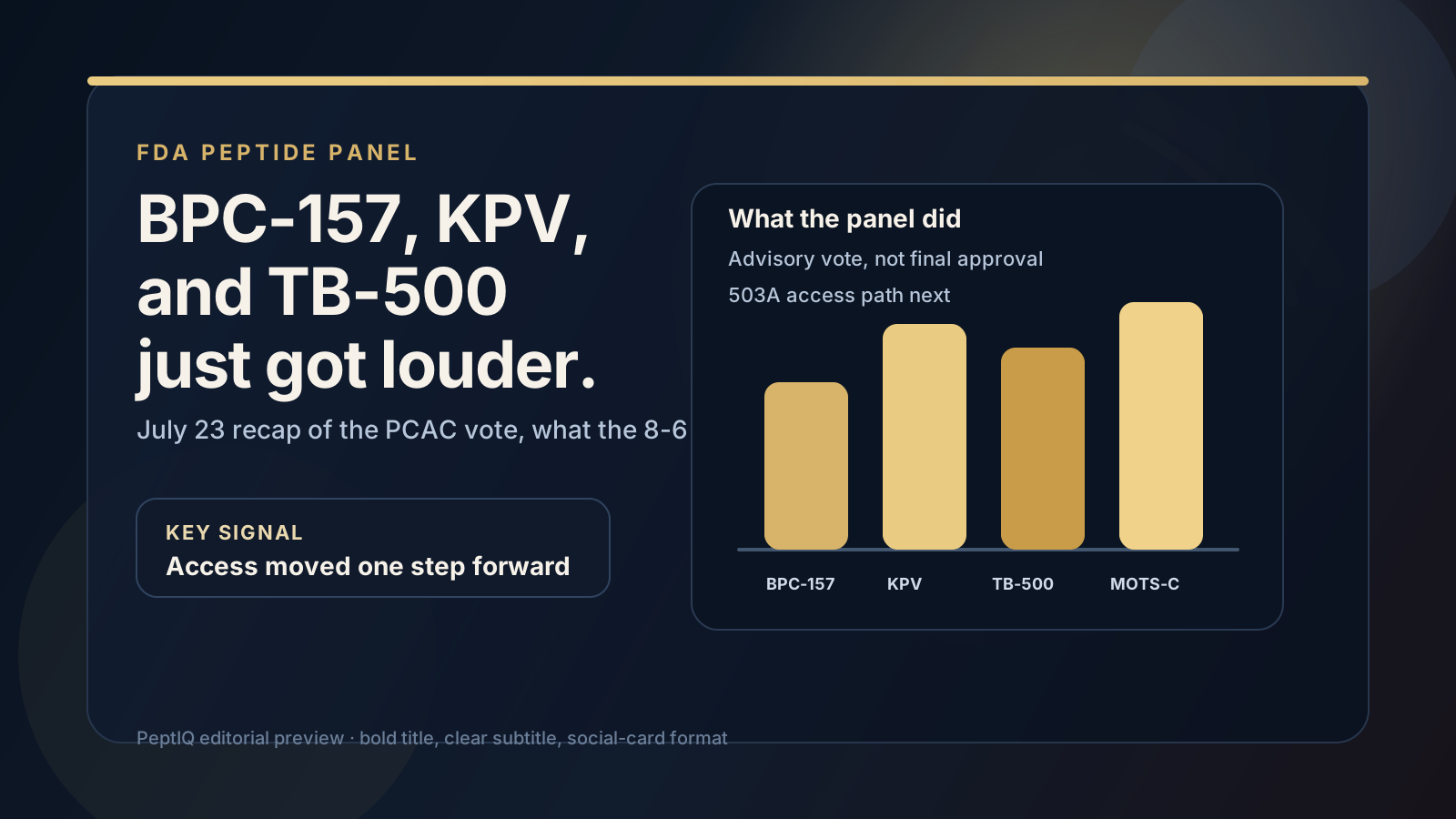
9mThe FDA's peptide panel made its first moves on BPC-157, KPV, and TB-500. The vote matters, but the real story is what it changes next and what still has to happen before compounding pharmacies see any relief.
 10m
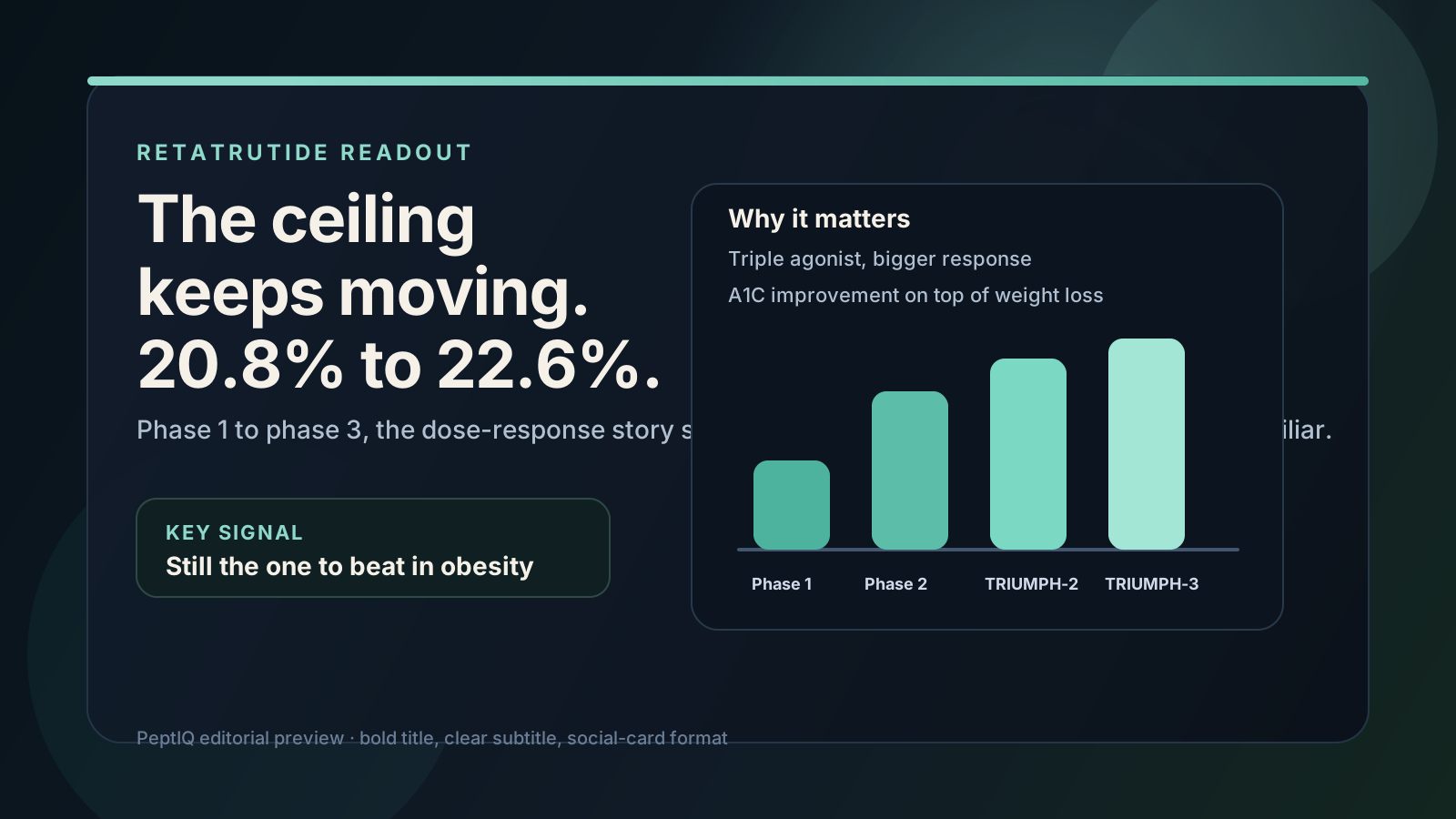
10mRetatrutide just posted two more strong phase 3 wins. The new numbers matter, but the bigger story is how phase 1, phase 2, and phase 3 now line up into one very clear dose-response story.
 8m
8mGHK-Cu is not a magic skin fix. It is a copper peptide with a real research trail behind collagen support, tissue remodeling, and wound healing.
 9m
9mPeptides are not only treatment candidates anymore. New constrained ligands may help doctors see the tumor microenvironment more clearly, which changes how researchers think about diagnostics, targeting, and drug design.
 9m
9mThe peptide conversation is crowded. The useful question is which signals keep showing up in the data and which ones are still mostly hype.
 9m
9mMOTS-C sits at the intersection of mitochondrial signaling, metabolism, and longevity. July 2026 put it back in the spotlight for a reason.
 8m
8mThe peptide space is loud. This snapshot cuts through the noise and focuses on the compounds that still have real biology behind them.
 8m
8mMOTS-C may help metabolic signaling in human cells, but the same signal could come with a repair cost. That matters for anyone reading the longevity hype.
 10m
10mThe most useful peptide research is not the loudest. It is the stuff that changes the question from 'does it work?' to 'who does it help, for what outcome, and with what tradeoffs?'
 9m
9mHealthy aging is not a slogan. It is a measurable question about inflammation, tissue repair, metabolic control, and whether a peptide has human data behind it.
 8m
8mMOTS-c is not just a mitochondrial story. In human cells, the same signal that turns on metabolism may also dampen repair, which makes context matter.
 8m
8mGLP-1s can drive impressive weight loss, but the real win is losing fat without giving up strength. This guide shows how to protect lean mass while appetite is down.
 12m
12mRetatrutide dominates H1 logging, the Wolverine stack is real, and quick-log onboarding predicts who actually tracks. Our first semi-annual data report from thousands of real peptide logs.
 9m
9mSports medicine keeps pulling peptides into the conversation because recovery pressure is real. The hard part is separating promising biology from weak evidence, gray-market hype, and antidoping risk.
 9m
9mRetatrutide's weight-loss signal is now strong enough that people are comparing it with surgery. That comparison is useful, but only if you understand what the numbers do and do not mean.
 9m
9mRetatrutide is no longer just a weight-loss story. The latest kidney-aware review sharpens the question: which metabolic patients need tighter monitoring, slower escalation, and better data?
 8m
8mMOTS-c is showing up in cardiac stress research. A new rat-heart study points toward mitochondrial bioenergetics, mtDNA integrity, and post-ischemic recovery.
 8m
8mMOTS-c is moving beyond generic energy claims. New research points toward mitochondrial stress response, lung inflammation, and cardiac reperfusion biology.
 8m
8mGLP-1 research is moving into healthspan and epigenetic aging. The new semaglutide signal is worth tracking, but it is not proof of age reversal.
 8m
8mMOTS-c is being studied beyond energy and metabolism. New research points toward tissue-stress biology, lysosomal stability, and cell survival under ischemic pressure.
 8m
8mGLP-1 research is moving beyond weight loss. New breast cancer risk and survival signals are interesting, but they need careful interpretation.
 8m
8mThe next metabolic peptide wave is not just stronger GLP-1 dosing. Amylin, GIP, glucagon, and combination protocols are changing what serious tracking should include.
 7m
7mGLP-1 therapy is no longer just GLP-1. CagriSema, cagrilintide, petrelintide, and amycretin show why amylin is becoming a serious metabolic target.
 8m
8mPeptide research is moving fast. Here is how to read the evidence before turning a headline, mechanism, or social post into a protocol.
 8m
8mNew 2026 data puts BPC-157 into a sharper recovery frame: oxidative stress, inflammation, apoptosis, angiogenesis, and the limits of animal evidence.
 8m
8mGLP-1 research is moving beyond weight loss. Recent ophthalmology studies suggest possible links with age-related macular degeneration, but the signals are mixed and need careful interpretation.
 8m
8mMOTS-c is moving beyond the generic energy peptide conversation. New 2026 research connects mitochondrial-derived peptides with atrial fibrosis, inflammation, and heart rhythm biology.
 8m
8mA new MOTS-c pilot study adds a vascular-health signal to the mitochondrial peptide conversation, but it should be read as biomarker research, not a protocol claim.
 7m
7mGLP-1 peptides are changing the bariatric surgery conversation. The practical lesson is not self-managing around surgery. It is better tracking, clearer handoffs, and coordinated medical planning.
 8m
8mMOTS-c is one of the most interesting mitochondrial peptides in 2026 because the question is finally shifting from mechanism to human outcomes.
 8m
8mThe July 2026 FDA peptide review is important, but it is not an approval event. Here is how to track the meeting, sourcing changes, and protocol decisions without confusing policy movement with clinical proof.
 7m
7mThe biggest peptide trend in 2026 may not be a molecule. It may be oversight, sourcing quality, and the ability to separate evidence from marketing.
 7m
7mTwo 2026 peer-reviewed reviews in Sports Medicine and JAAOS now formally catalog BPC-157, TB-500, GHK-Cu, CJC-1295, and Ipamorelin stacks. Here is what the science actually shows — and where the gaps still are.
 7m
7mMOTS-c is a peptide encoded in your mitochondrial DNA that declines with age and mimics exercise benefits in animal studies. NAD+ has actual human clinical data. Here's what 2026 research shows about why these two molecules may work together — and what's still missing.
 7m
7mDapiglutide is not another simple GLP-1 copycat. The early 2026 trial missed statistical significance for weight loss, but the mechanism points toward the next phase of peptide design.
 8m
8mNew head-to-head trials and real-world data from 2025-2026 reveal tirzepatide and semaglutide are not equivalent - they produce meaningfully different outcomes depending on your goals.
 7m
7mAMA and FDA updates make one thing clear: peptide interest is moving faster than human evidence, dosing standards, and product-quality controls. Use this checklist before trusting a vial.
 8m
8mTesamorelin has one of the stronger human-data profiles in the peptide space. A 2026 meta-analysis helps clarify what it improves, what it does not, and how to track the signal honestly.
 7m
7mA new 2026 meta-analysis puts real numbers on lean mass change during semaglutide, tirzepatide, and liraglutide weight loss. The practical takeaway is not panic. It is better tracking.
 8m
8mHealth Canada's 2026 public advisory names unauthorized injectable peptides sold online and explains why product quality, legal status, and medical supervision matter.
 8m
8mRetatrutide is no longer just a weight-loss headline. Current 2026 trial records show researchers testing broader questions: pain, liver disease, cardiorenal risk, dose escalation, and lean-mass preservation.
 8m
8mA new sports medicine review puts injury-recovery peptides in context. Some mechanisms are promising, but human evidence, safety data, and regulatory status still matter.
 8m
8mNew 2026 reviews show a nutrition gap in GLP-1 and incretin therapy research. Here is how to protect protein intake, lean mass, hydration, and labs while appetite is suppressed.
 8m
8mThe FDA's April 2026 announcement removed 12 peptides from Category 2 restrictions — the biggest regulatory shift in years. BPC-157, TB-500, MOTS-C, GHK-Cu, and Semax are among those affected. Here's what it actually means for your access.
 8m
8mSeven FDA warning letters in April 2026 show regulators are paying closer attention to online peptide sellers, especially research-use-only marketing that looks like consumer health claims.
 9m
9mYou don't need to have diabetes to benefit from GLP-1 therapy. A comprehensive 2026 systematic review confirms what the peptide community has known for years — and the results are striking.
 9m
9mAfter years of FDA crackdowns on research peptides, a significant regulatory reversal in 2026 has changed the landscape for BPC-157, TB-500, and MOTS-C. Here's what actually happened and what it means for you.
 7m
7mOn April 15, 2026, the FDA announced it will remove injectable GHK-Cu from Category 2 — the list that blocked compounding pharmacies from producing it. This is a major regulatory shift for one of the most studied copper peptides in longevity research.
 7m
7mPeptide therapy searches on TikTok jumped 459% in early 2026. Here's what's driving the explosion, which peptides are trending, and what you need to know before you start.
 9m
9mFor years, GLP-1 therapy meant a weekly injection. The FDA just changed that. Foundayo is the first oral GLP-1 approved for weight management, and the implications for the peptide community go far beyond convenience.
 9m
9mEveryone focused on the 71-pound weight loss stat from TRIUMPH-4. But the buried finding — 75.8% reduction in knee pain scores — may be the more important number for anyone living with joint pain.
 9m
9mThe FDA's April 15, 2026 reclassification of 12 research peptides marks the most significant regulatory shift in the space since the 2023 compounding crackdown. Here's a breakdown of the affected compounds, the new compliance landscape, and how to think about your protocol going forward.
 10m
10mAn FDA advisory panel scheduled for July 2026 could reshape access to 12 peptides — including BPC-157, MOTS-C, and GHK-Cu. Here's what's on the table, what reclassification would mean in practice, and how to prepare for either outcome.
 9m
9mGHK-Cu has long been known for its skin and healing benefits. A fresh April 2026 preprint adds a surprising new dimension — cognitive aging reversal in mouse models via BDNF upregulation and neuroinflammation suppression.
 9m
9mTesamorelin is an FDA-approved GHRH analog with clinical trials proving 15–20% visceral fat reduction. Here's the full science, dosing guide, and what the latest research reveals about its longevity applications.
 9m
9mAfter years of regulatory limbo, BPC-157 is at the center of a major policy battle. The RFK Jr.-led HHS push to reclassify it as Category 1 could restore legal compounding access—or the FDA could dig in. Here's where things stand.
 10m
10mPhase 3 trial data is in: retatrutide delivers 28.7% average body weight reduction, outpacing every approved GLP-1 therapy. The numbers tell a clear story about where metabolic medicine is heading.
 9m
9mA 2026 Phase 2 clinical trial confirms GHK-Cu achieves 25% faster wound closure and tissue regeneration versus control. Discover how this naturally occurring copper peptide triggers stem cell activity, collagen synthesis, and anti-inflammatory cascades.
 9m
9mDiscovered inside mitochondrial DNA itself, MOTS-c is one of the most fascinating longevity peptides in modern science. It governs how your cells produce energy, fight fat accumulation, and age.
 9m
9mA potential FDA regulatory shift on 14 compounded peptides — including BPC-157 and TB-500 — could reshape who gets access to peptide therapy and how. Here's what the current signals actually mean.
 10m
10mThe largest systematic review of BPC-157 to date analyzed 36 studies and confirmed consistent healing outcomes across tendons, ligaments, bone, and muscle tissue. Here's what the data shows.
 11m
11mA 2026 meta-analysis comparing retatrutide to GLP-1 (Ozempic/Wegovy) and tirzepatide shows retatrutide delivers 28% superior fat loss. Here's the science behind why the triple-agonist approach is reshaping weight loss and body recomposition.
 10m
10mTB-500 has moved from rodent models to human cardiac recovery trials. The 2026 data is early, but the mechanism and results are worth understanding — especially if you're using TB-500 for recovery.
 10m
10mTRANSCEND confirmed retatrutide as the most effective GLP-1 class compound tested in late-stage trials. 16.8% mean body weight reduction and a 2.0-point A1C drop in 40 weeks — here's what the full data shows.
 14m
14mThe peptide space is shifting from weight loss toward longevity. Explore the science behind peptides designed to slow aging, repair cellular damage, and extend healthspan.
 10m
10mThe peptide space is evolving rapidly. Here's what researchers are discovering, which new compounds show promise, and what breakthroughs could hit the market soon.
 18m
18mFrom BPC-157 and GLP-1 agonists at the top to overhyped flops at the bottom — here's every major peptide ranked for 2026 across fat loss, skin, longevity, and recovery.
Also available at /blog for legacy links.