


Loading lessons…
Loading lessons…
Curated lessons across 8 learning paths — from first concepts to trial summaries and practical protocols. Pick your level, follow the curriculum, and build real understanding.
Where are you starting?
Choose a learning path below or search the library. Progress saves in your browser.
Prefer timeline chaos? Peptide X Quiz · Literacy certify
Pick a track — progress rings update as you complete lessons.
21 lessons
 8m
8mCT-388 is Roche's weekly tirzepatide-class dual agonist with Phase 2 doses up to 24 mg. Here's the dosing vocabulary and the weight-loss signal searchers want.
 9m
9mEloralintide is Lilly's once-weekly selective amylin receptor agonist. If you follow GLP-1s, CagriSema, or retatrutide, this is the next pathway to understand — satiety biology, trial doses, and what the early data actually show.
 8m
8mSearching for eloralintide dosage? Here is the clean map of Phase 2 once-weekly doses, titration arms, and weight-loss results — framed as clinical education, not a DIY protocol.
 8m
8mAmylin + incretin is the stacking thesis behind CagriSema — and now eloralintide. Here's the clinical logic for combining pathways, without turning investigational drugs into DIY stacks.
 7m
7mAmylin agonists can feel GLP-1-like in the gut. Here's how to think about eloralintide tolerability, escalation, and symptom tracking without turning trial data into fear content.
 8m
8mTwo weekly amylin programs, two sponsors, two data shapes. Here's a clear eloralintide vs petrelintide comparison for people following the next obesity wave.
 8m
8mPhase 2 put eloralintide on the board with roughly 9–20% mean weight loss at 48 weeks. Here's the results breakdown — and the troubleshooting mindset for plateaus on any amylin or GLP-1 protocol.
 8m
8mMariTide is Amgen's once-monthly obesity candidate. This beginner guide covers the mechanism framing, Phase 2 headlines, and what serious trackers should log.
 9m
9mMariTide is the once-monthly obesity candidate people keep comparing to weekly GLP-1s. Here's the Phase 2 dosing map — 140 / 280 / 420 mg and the escalation arms that mattered for tolerability.
 7m
7mMonthly conjugates can pack a bigger post-dose GI window. Here's how to think about MariTide tolerability using Phase 2 lessons — without fear content.
 8m
8mWeekly vs monthly is the real MariTide comparison. Here's how Amgen's conjugate stacks up conceptually against weekly dual/triple agonists — without fake head-to-heads.
 7m
7mPetrelintide is the amylin analog drawing attention for tolerability. This beginner guide covers what it is, what ZUPREME-1 showed, and what to watch next.
 8m
8mPetrelintide is the Roche/Zealand once-weekly amylin analog drawing GLP-1-level attention for tolerability. Here's the Phase 2 dosing pattern, results, and what to track.
 8m
8mSurvodutide is Boehringer's glucagon/GLP-1 dual agonist. Here's the dosing map from dose-finding through Phase 3 — weekly mg ranges, escalation logic, and what the weight-loss data showed.
 10m
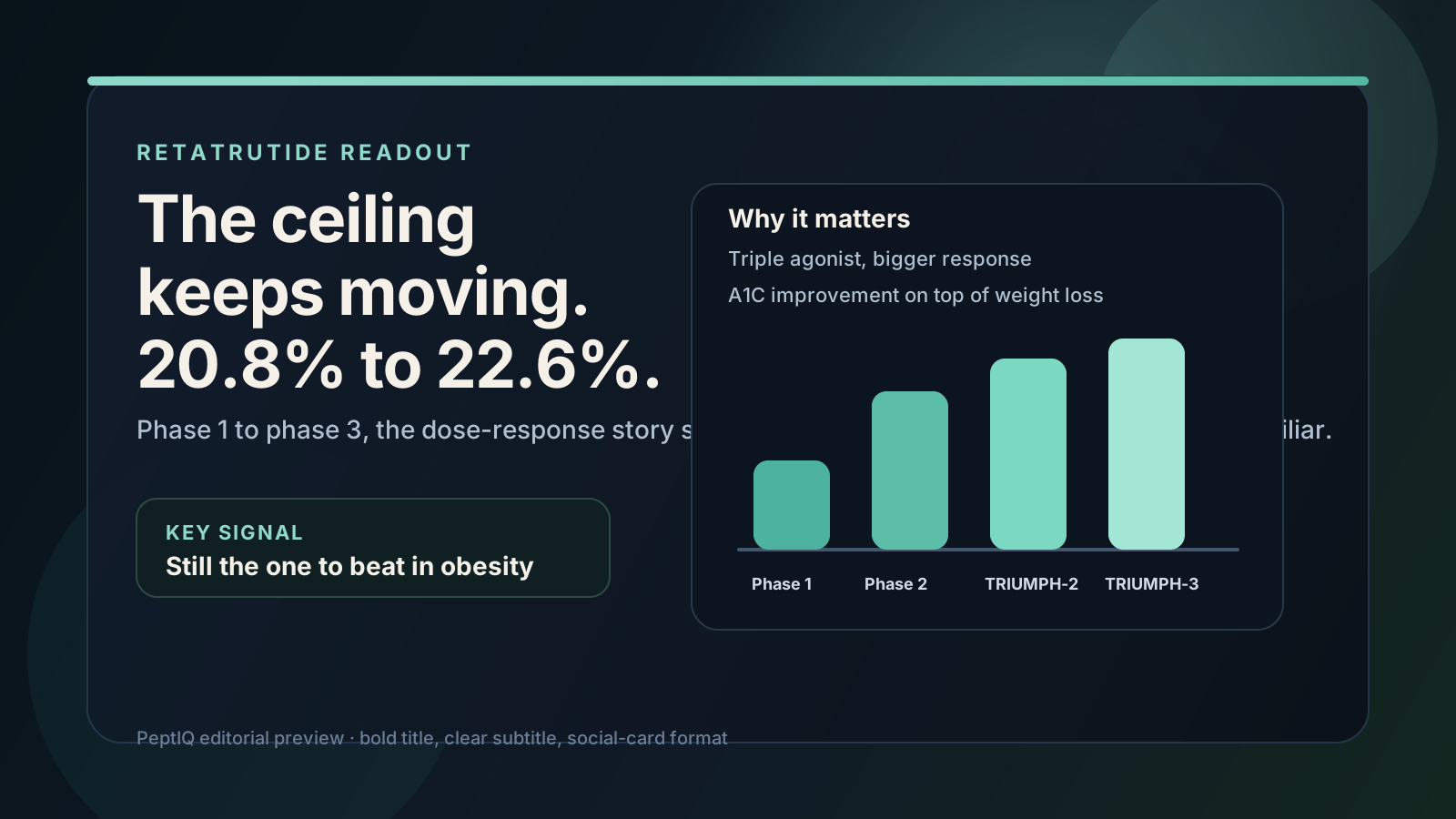
10mRetatrutide just posted two more strong phase 3 wins. The new numbers matter, but the bigger story is how phase 1, phase 2, and phase 3 now line up into one very clear dose-response story.
 8m
8mGHK-Cu is moving beyond skin-care hype into a controlled wound-healing study. Here is how to read the Phase 2 trial without overclaiming the result.
 8m
8mMOTS-c is one of the most interesting mitochondrial peptides in 2026 because the question is finally shifting from mechanism to human outcomes.
 7m
7mAfter 30+ years of animal research and 212 preclinical studies, BPC-157 has entered its first Phase 2 human trial. Here's what it will test, what it won't prove, and what to track.
 8m
8mBPC-157 finally has a registered human sports-injury study. The signal is important, but it is not proof yet. Here is how to read the trial without the hype.
 9m
9mMOTS-c — a peptide synthesized inside your own mitochondria — is now in Phase 2a human trials for prediabetes. Early data suggests it improves insulin sensitivity and metabolic flexibility without the side effects of pharmaceutical interventions.
 9m
9mA 2026 Phase 2 clinical trial confirms GHK-Cu achieves 25% faster wound closure and tissue regeneration versus control. Discover how this naturally occurring copper peptide triggers stem cell activity, collagen synthesis, and anti-inflammatory cascades.
Also available at /blog for legacy links.