


Loading lessons…
Loading lessons…
Curated lessons across 8 learning paths — from first concepts to trial summaries and practical protocols. Pick your level, follow the curriculum, and build real understanding.
Where are you starting?
Choose a learning path below or search the library. Progress saves in your browser.
Prefer timeline chaos? Peptide X Quiz · Literacy certify
Pick a track — progress rings update as you complete lessons.
9 lessons
 9m
9mPhase 3 data on retatrutide side effects, in plain English: how often nausea, diarrhea, dysesthesia (skin burning), low blood pressure and injection-site reactions showed up by dose, and what the trials don't tell you.
 7m
7mPositive TRIUMPH-2 and TRIUMPH-3 results did not produce a 2026 filing. Lilly says the remaining work is in the CMC and manufacturing package.
 10m
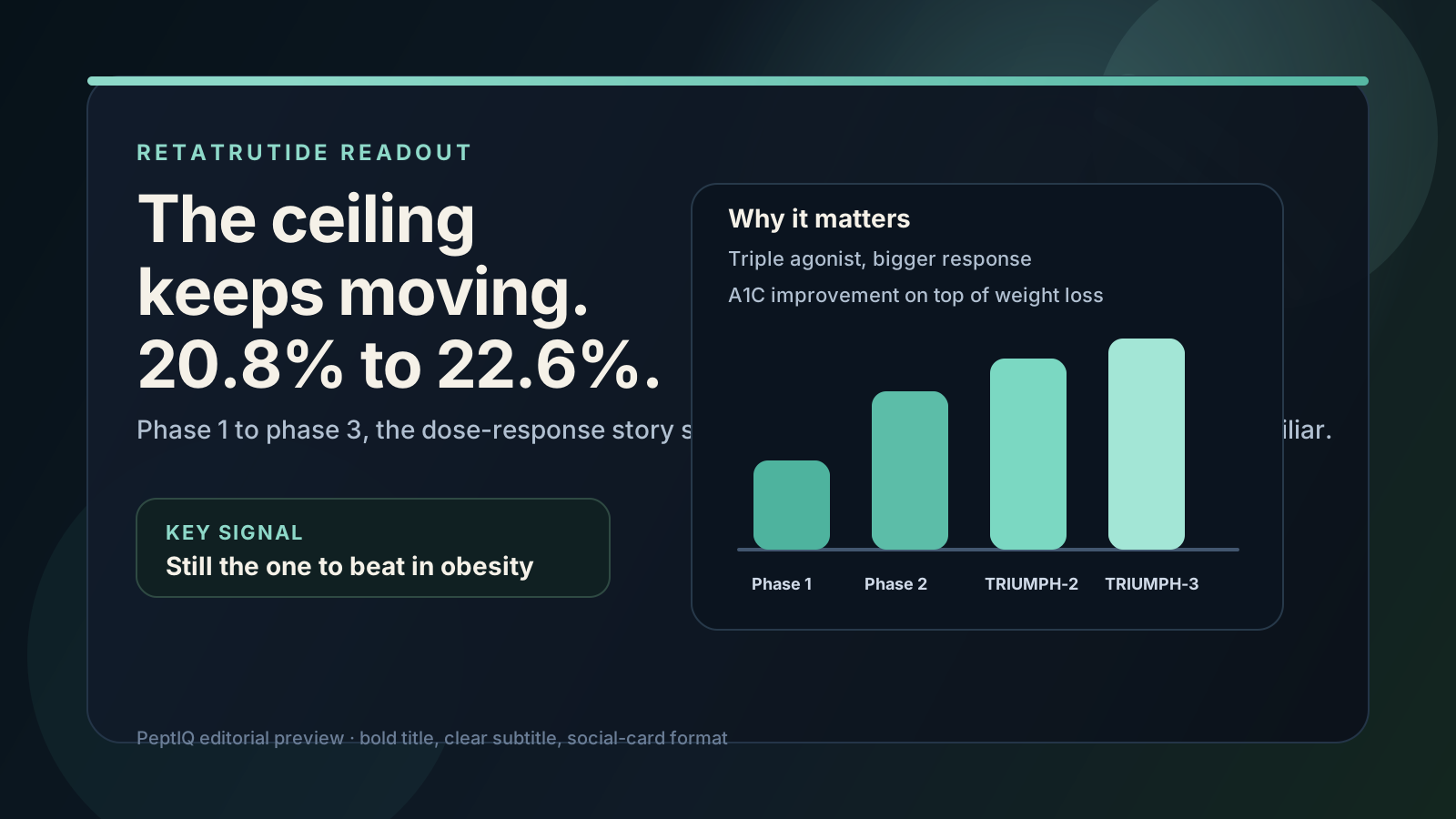
10mRetatrutide just posted two more strong phase 3 wins. The new numbers matter, but the bigger story is how phase 1, phase 2, and phase 3 now line up into one very clear dose-response story.
 8m
8mThe new TRIUMPH-1 readout gives retatrutide users a clearer dose-response map: 4 mg, 9 mg, and 12 mg all worked, but the tolerability tradeoffs matter.
 9m
9mThe TRIUMPH-4 trial delivers groundbreaking dual benefits: 28.7% body weight reduction plus significant osteoarthritis pain relief. Retatrutide's triple mechanism may solve two problems simultaneously.
 7m
7m31% body weight loss in a trial participant. Not an average — an individual result. But when 39.4% of Phase 3 participants on the 12mg dose hit the same milestone, the outlier becomes a pattern.
 9m
9mNew Phase 3 data shows Retatrutide nearly doubled the weight loss results of current GLP-1 drugs without hitting a plateau.
 9m
9mEveryone focused on the 71-pound weight loss stat from TRIUMPH-4. But the buried finding — 75.8% reduction in knee pain scores — may be the more important number for anyone living with joint pain.
 9m
9mPhase 3 data is in: retatrutide produced an average 28.7% body weight reduction — roughly 71 lbs — in the TRIUMPH-4 trial. Here's what the numbers mean and how the triple agonist mechanism drives these results.
Also available at /blog for legacy links.