One molecule, three receptors
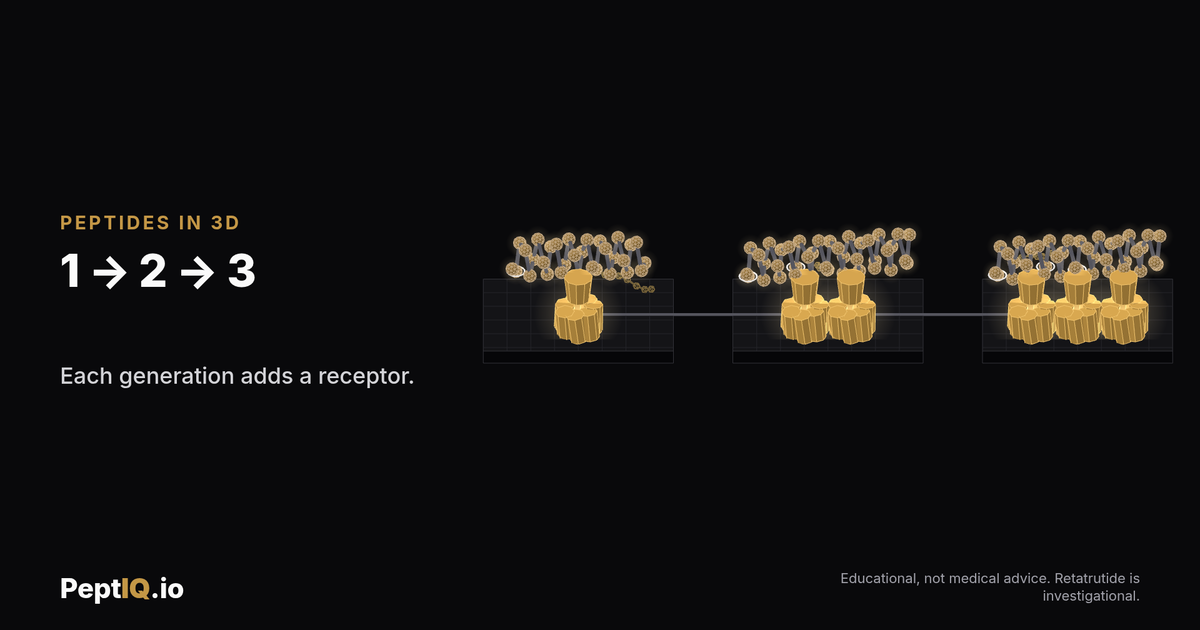
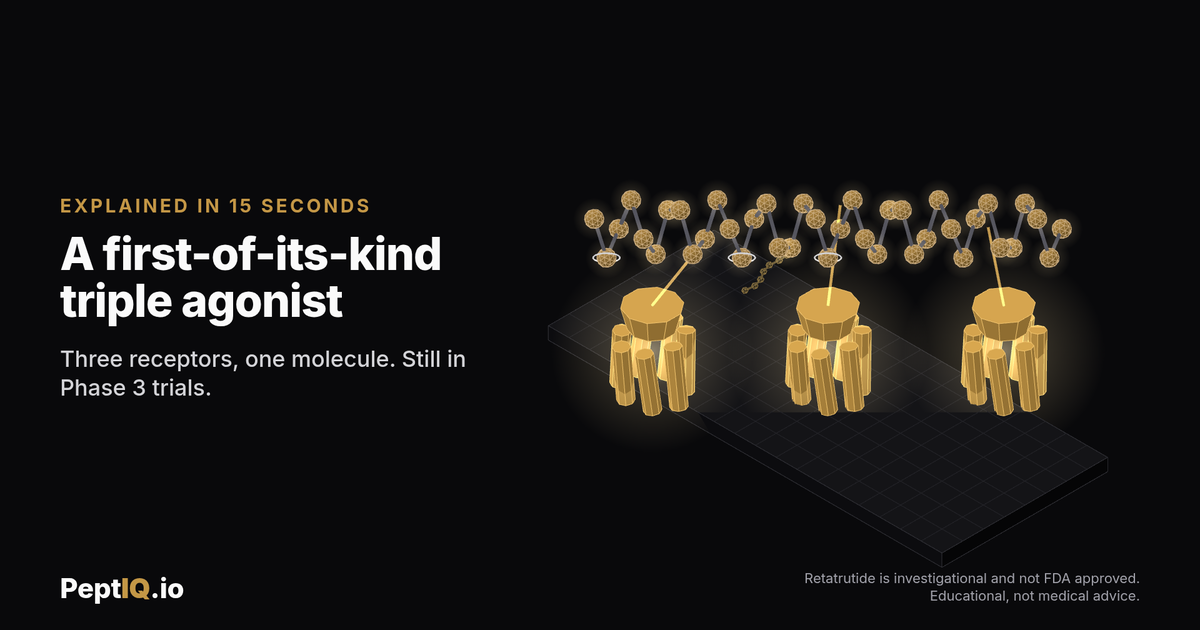
Retatrutide (LY3437943) is a 39-amino-acid peptide built to activate three hormone receptors at once: GLP-1, GIP and glucagon. Semaglutide targets one of these and tirzepatide targets two, which is why retatrutide is often called a triple agonist.
What each receptor does
GLP-1 signals fullness and slows how fast the stomach empties. GIP is a second gut-hormone signal tied to insulin and blood sugar. Glucagon receptor activation is studied for raising energy use and fat burning in the liver.
Why the chain has unusual beads
Three positions use amino acids that aren't among the standard 20 (Aib at positions 2 and 20, α-methyl-leucine at 13), and lysine 17 carries a fatty-acid chain that binds albumin in the blood. Tap the ringed beads in the model to see them.
Where it stands
Retatrutide is investigational. It is in Phase 3 trials and is not FDA approved for any use.