Loading lessons…
Peptide learning paths
Learn peptides step by step
Curated lessons across 8 learning paths — from first concepts to trial summaries and practical protocols. Pick your level, follow the curriculum, and build real understanding.
Where are you starting?
284lessons
8paths
0day streak
0%explored
Start your first lesson
Choose a learning path below or search the library. Progress saves in your browser.
Prefer timeline chaos? Peptide X Quiz · Literacy certify
Learning paths
Pick a track — progress rings update as you complete lessons.
15 lessons
 7m
7mPeptidesIntermediate
Epitalon After the Advisory Vote: Compounding Access and Evidence Gaps
Epitalon received a narrow advisory vote for 503A compounding in insomnia. That vote is not FDA approval, immediate access, or validation of longevity claims.
 7m
7mResearchAdvanced
Orforglipron vs Weekly Injectable GLP-1s: How the Oral Option Changes Access
The first small-molecule oral GLP-1 option removes injection training and cold-chain handling, but daily dosing creates a different adherence job.
 7m
7mPolicyAdvanced
After the PCAC Votes: Category 1 Interim Access vs Waiting for Rulemaking
PCAC recommended BPC-157, KPV, TB-500, MOTS-c, Semax, and Epitalon for 503A compounding. The unresolved fight is what happens while FDA completes rulemaking.
 7m
7mPolicyAdvanced
Semax After the PCAC Recommendation: Access, Evidence, and What to Watch
The favorable Semax vote moved its compounding nomination forward, but the narrow result exposed unresolved questions about evidence, characterization, and US clinical use.
 8m
8mResearchAdvanced
September 2026 Peptide Research Signals: Access, Pipelines, and Quality
The loudest peptide stories are moving at different speeds. PCAC recommendations await FDA action, oral GLP-1 access is real, and the next obesity programs still have filing or review milestones ahead.
 7m
7mPeptidesIntermediate
TB-500 After the July PCAC Vote: The Compounding Path That Still Is Not Open
TB-500 received a favorable advisory recommendation for wound healing. FDA action still has to follow, and the product sold online may not match the substance the committee reviewed.
 7m
7mSafetyIntermediate
Telehealth Peptide Prescribing After the 2026 PCAC Votes
A favorable advisory vote is not permission to prescribe or compound. Here is the practical standard telehealth clinics should use after the 2026 PCAC meeting.
 8m
8mSafetyIntermediate
BPC-157 Advisory Review: What It Means for Compounding Access in 2026
BPC-157 is still a research compound, but the advisory review makes one thing clear: access, sourcing, and evidence quality now matter as much as the mechanism.
 10m
10mResearchAdvanced
Retatrutide Early Access: What It Signals for Obesity Treatment, Timing, and Body Composition
Retatrutide is moving from conference noise into real-world access. That shift changes the conversation from headline weight loss to who gets treated, what gets monitored, and how body composition holds up.
 9m
9mPolicyAdvanced
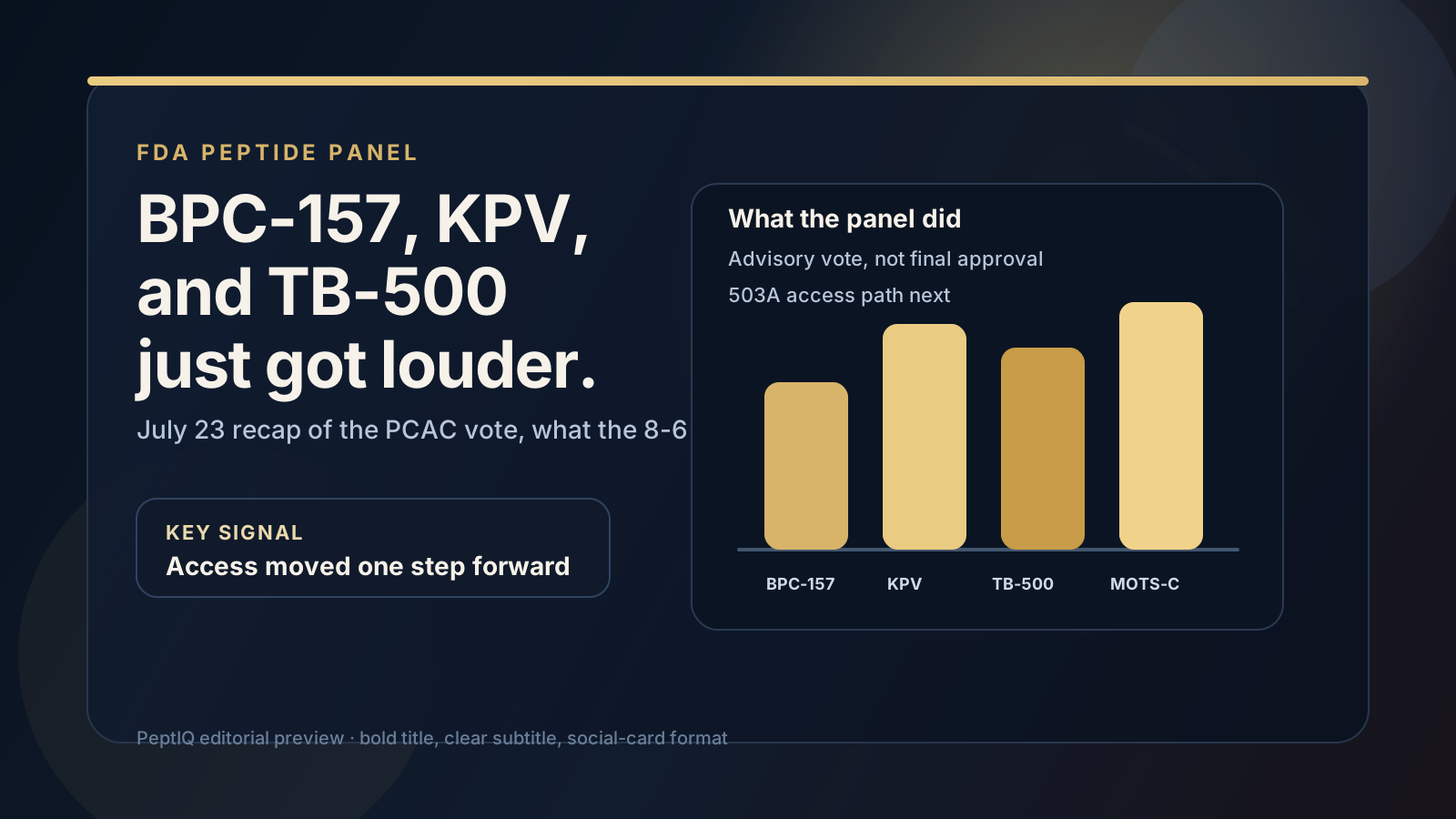
FDA's July 23 Peptide Panel Backed BPC-157, KPV, and TB-500. Here Is What Happens Next.
The FDA's peptide panel made its first moves on BPC-157, KPV, and TB-500. The vote matters, but the real story is what it changes next and what still has to happen before compounding pharmacies see any relief.
 8m
8mPolicyAdvanced
FDA Removes 12 Peptides from Category 2 Restrictions: What Changed in April 2026
The FDA's April 2026 announcement removed 12 peptides from Category 2 restrictions — the biggest regulatory shift in years. BPC-157, TB-500, MOTS-C, GHK-Cu, and Semax are among those affected. Here's what it actually means for your access.
 9m
9mResearchAdvanced
RFK Jr., the FDA, and BPC-157: What the 2026 Regulatory Reversal Means for Peptide Access
After years of FDA crackdowns on research peptides, a significant regulatory reversal in 2026 has changed the landscape for BPC-157, TB-500, and MOTS-C. Here's what actually happened and what it means for you.
 10m
10mPolicyAdvanced
FDA Schedules July 2026 Advisory Panel to Reclassify 12 Peptides — What It Means for BPC-157, MOTS-C, and GHK-Cu
An FDA advisory panel scheduled for July 2026 could reshape access to 12 peptides — including BPC-157, MOTS-C, and GHK-Cu. Here's what's on the table, what reclassification would mean in practice, and how to prepare for either outcome.
 9m
9mPolicyAdvanced
BPC-157 and the 2026 Regulatory Shift: What the HHS Category 1 Push Means for Peptide Access
After years of regulatory limbo, BPC-157 is at the center of a major policy battle. The RFK Jr.-led HHS push to reclassify it as Category 1 could restore legal compounding access—or the FDA could dig in. Here's where things stand.
 9m
9mPolicyAdvanced
FDA's Regulatory Shift on Compounded Peptides: What the 2026 Policy Signals Mean for You
A potential FDA regulatory shift on 14 compounded peptides — including BPC-157 and TB-500 — could reshape who gets access to peptide therapy and how. Here's what the current signals actually mean.
Also available at /blog for legacy links.